Home Blog Page 161

Geography Grade 12: Tropical Cyclone Ana Questions for Practice

Geography Grade 12: Tropical Cyclone Ana Questions for Practice Here are some practice questions related to Tropical Cyclone Ana that you can use for your Grade 12 Geography studies.

Geography Grade 12: Tropical Cyclone Ana Questions for Practice

Refer to the extract on Tropical Cyclone Ana

MODERATE TROPICAL STORM ANA DOES NOT POST ANY DIRECT THREAT TO SOUTH AFRICA 

This weekend saw the first tropical system of the 2021/22 tropical cyclone season for the Southwest Indian Ocean Basin.  Towards the end of last week, a tropical low began rapidly intensifying over the open ocean to the northeast of Madagascar, northwards of Mauritius and Reunion islands.  ‘Over the weekend, the system turned gradually from east to west over central and northern Madagascar, temporarily losing intensity due to surface friction with the landmass, as well as the absence of the release of latent heat energy from the ocean surface (the main energy driver for tropical cyclones).  ‘Overnight, the system continued to intensify, reaching Moderate Tropical Storm intensity in the early hours of Monday morning, leading to its official naming of ‘Ana’.  ‘The system tracked westwards and by local sunrise on Monday morning, was lying just off the northern Mozambican coastline between Angoche and Mogincual. The system then tracked in an easterly direction.

Tropical Cyclone Ana Video

Geography Grade 12: Tropical Cyclone Ana Questions for Practice

1How does the name of the tropical cyclone suggest that it was the first of the 2021/22 tropical cyclone season? (1 x 1)

Answer: The name starts with letter A/First letter of the alphabet

(1)
2State ONE island listed in the article that would be affected by the tropical cyclone. (1 x 1)

Answer:
Madagascar (1)
Reunion (1)
Mauritius (1)

(1)
3Why are these islands effected by a tropical cyclone? (1 x 1)

Answer:
These islands are in the direct path of the tropical cyclone that moves in an easterly direction

(1)
4How does latent heat intensify (strengthen) the tropical cyclone? (2 x 2)

Answer:
– Latent heat is distributed vertically around the centre of the storm (2)
– This leads to a pressure drop at the surface (2)
– Pressure gradient between the storm and the surface strengthened

(4)
5Account for the tropical cyclone tracking in an easterly direction. (2 x 2)

Answer:
The cyclone moves towards higher sea temperatures (2)
It encounters a different wind belt (westerly wind belt)

(4)
6Explain the negative economic impact of strong winds on the coastal infrastructure of Mozambique.

Answers:

– Strong winds cause storm surges that would damage harbours (2)
– Damage to harbours will limit imports and exports (2)
– Commercial fishing vessels would not be able to go out to sea (2)
– It would discourage tourism and its related coastal activities  (accept examples) (2)
– There would be a loss of jobs in the tourism sector (2)
– Repairs to infrastructure along the coast would be costly for  insurance companies or government (2)

Source: https://ajiraforum.com/south-africa/geography-grade-12-tropical-cyclone-ana-questions-for-practice/
Geography Grade 12: the difference between rural and urban climates

Geography Grade 12: the difference between rural and urban climates The climates of rural and urban areas can differ due to various factors, including human activities, land use patterns, and the physical characteristics of the environment.

Questions – Geography Grade 12: the difference between rural and urban climates

the difference between rural and urban climates exam revision questions and answers

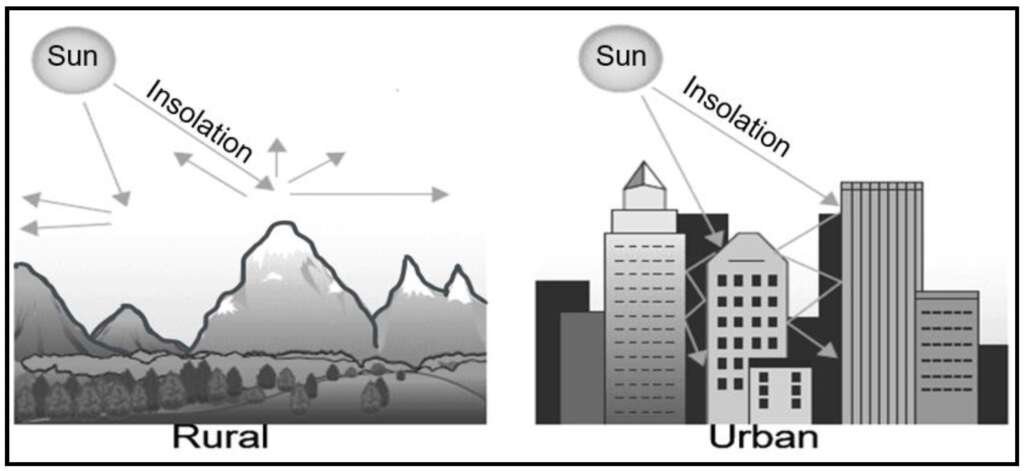
The climatic element illustrated in the sketch is (wind/temperature)Answer: Temperature

Here are some key differences between rural and urban climates:

  1. Temperature: Urban areas often experience higher temperatures than rural areas, a phenomenon known as the urban heat island effect. This is primarily because of the prevalence of concrete and asphalt surfaces in cities, which absorb and retain heat more than natural surfaces.
  2. Wind Patterns: Rural areas tend to have more open spaces and fewer obstructions, allowing for freer movement of air. Urban areas, with their tall buildings and compact structures, can disrupt natural wind patterns, leading to lower wind speeds and altered air circulation.
  3. Humidity: Urban areas may have lower humidity levels compared to rural areas. This is due in part to increased heat and the presence of impervious surfaces in cities, which reduce evaporation and contribute to drier conditions.
  4. Precipitation: Urbanization can affect precipitation patterns. Some studies suggest that cities may experience increased rainfall because of the heat generated by human activities. However, local factors such as topography and geographic location also play a significant role in precipitation patterns.
  5. Air Quality: Urban areas often face air quality issues due to pollution from vehicles, industrial activities, and other sources. Rural areas generally have better air quality, although agricultural activities can contribute to specific air quality challenges in those regions.
  6. Microclimates: Within both rural and urban areas, there can be microclimates—small-scale variations in climate conditions. Urban areas, with their diverse surfaces and structures, may have more pronounced microclimates, leading to variations in temperature, humidity, and wind patterns over short distances.
  7. Vegetation: Rural areas typically have more natural vegetation, which can influence local climates by providing shade, releasing moisture through transpiration, and affecting wind patterns. In contrast, urban areas may have limited green spaces, impacting the local microclimate.
  8. Noise and Light Pollution: While not strictly climate-related, noise and light pollution are more prevalent in urban areas and can influence the overall environmental conditions experienced by residents.

Explain how the different shapes and density of buildings (in the sketch) contribute to the city having higher temperatures

Answer:

  • Tall buildings cause the sun’s rays to be reflected and deflected between the buildings
  • Large surface areas of buildings absorb more of the sun’s rays
  • Density of buildings ensures that the heat remains closer to the earth’s surface

In a paragraph of approximately EIGHT lines, explain how urban planners could put strategies in place regarding the shapes and density of buildings in order to reduce the higher temperatures

Answer:

  • Paint buildings in lighter colours e.g. white to increase reflection of heat
  • Planting gardens on roof tops will cool temperatures
  • Buildings should be eco-friendly (green)
  • Future land use planning (buildings) should coincide with prevailing wind directions to cool cities
  • Decentralise commercial activities to reduce building density
  • Decrease building height to reduce heat trapped by buildings
  • Decrease building density to reduce heat near surface
  • Filters in chimneys of buildings to reduce air pollution

Conclusion

It’s important to note that these generalizations may not apply universally, as local geographic and climatic conditions vary widely. Additionally, ongoing urbanization and changes in land use can further modify the climate of both rural and urban areas.

How does Coriolis force influence the movement of ocean currents

How does Coriolis force influence the movement of ocean currents The Coriolis force plays a crucial role in influencing the movement of ocean currents. The Coriolis force is an apparent force that acts on moving objects on the Earth’s surface due to the rotation of the Earth. It deflects the path of moving objects to the right in the Northern Hemisphere and to the left in the Southern Hemisphere.

How does Coriolis force influence the movement of ocean currents

What is a Coriolis force

The Coriolis force is a fundamental force that arises from the rotation of the Earth. It acts on all moving objects, including ocean currents, and plays a significant role in shaping their behavior.

The Coriolis force is a result of the Earth’s rotation on its axis. As the Earth spins, it causes objects moving in the atmosphere or oceans to be deflected to the right in the Northern Hemisphere and to the left in the Southern Hemisphere. This deflection is known as the Coriolis effect.

How Coriolis force influences the movement of ocean currents

The Coriolis force is an effect that is created by the rotation of the Earth, which causes moving objects to deflect to the right in the Northern Hemisphere and to the left in the Southern Hemisphere. Coriolis force influences the movement of ocean currents in the following four ways:

  1. Direction of currents: The Coriolis force causes ocean currents to deflect to the right in the Northern Hemisphere and to the left in the Southern Hemisphere. This means that the direction of the ocean currents is influenced by the rotation of the Earth.
  2. Intensity of currents: The Coriolis force also affects the intensity of ocean currents. The deflection caused by the Coriolis force causes water to pile up on one side of the current, which creates a pressure gradient. This pressure gradient drives the flow of water, and the strength of the current is influenced by the pressure gradient.
  3. Formation of gyres: The Coriolis force is also responsible for the formation of large-scale ocean circulation patterns called gyres. The deflection of ocean currents caused by the Coriolis force creates circular motion in the ocean, which leads to the formation of gyres.
  4. Influence on climate: The movement of ocean currents is an important factor in regulating global climate patterns. The Coriolis force influences the movement of ocean currents, which in turn influences the distribution of heat around the globe.

DON’T MISS: How to Pass Geography Grade 12 NSC With Distinction

Overall, the Coriolis force is an important factor in influencing the movement of ocean currents. Its effect on the direction and intensity of ocean currents, the formation of gyres, and the influence on climate make it a key element in the study of oceanography.

Coriolis force influences the movement of ocean currents

In conclusion, the Coriolis force plays a significant role in shaping the movement of ocean currents. It causes currents to bend, rotate, and form eddies, and it affects the direction of upwelling and downwelling. Understanding the Coriolis force is essential for understanding the behavior of ocean currents, which have a significant impact on weather patterns, global climate, and marine ecosystems.


Geography Grade 12: Typical Line Thunderstorm Conditions in South Africa

Geography Grade 12: Typical Line Thunderstorm Conditions in South Africa In South Africa, thunderstorms are common during the summer months, particularly in the interior regions.

Geography Grade 12: Typical Line Thunderstorm Conditions in South Africa

Questions for Geography Grade 12: Typical Line Thunderstorm Conditions in South Africa:

The typical conditions that contribute to the development of thunderstorms include:

  1. Warm Temperatures: Thunderstorms often form when warm air at the surface rises and interacts with cooler air aloft. In South Africa, the summer months (November to February) are characterized by warm temperatures, creating an environment conducive to the development of thunderstorms.
  2. Moisture: The presence of moisture in the atmosphere is crucial for the formation of thunderstorms. South Africa experiences a variety of air masses, and when warm, moist air meets cooler air, it can lead to the lifting of the warm air, resulting in the formation of thunderstorms.
  3. Instability: Atmospheric instability occurs when warm air near the surface rapidly rises through the cooler air above. This vertical movement of air contributes to the development of cumulonimbus clouds, which are associated with thunderstorms.
  4. Topography: The topography of South Africa plays a role in thunderstorm development. Inland areas, especially the Highveld region, are more prone to thunderstorms due to the convergence of air masses and the lifting of warm, moist air over elevated terrain.
  5. Frontal Boundaries: The interaction of different air masses, such as a cold front meeting a warm front, can create conditions favorable for thunderstorms. Frontal boundaries can act as lifting mechanisms, initiating the upward movement of air and the formation of thunderstorms.
  6. Sea Breezes: Along the coastal areas, sea breezes can contribute to the development of thunderstorms. The temperature contrast between the warmer land and cooler sea can lead to the lifting of air, creating instability and thunderstorm formation.
  7. Solar Heating: Solar heating during the day contributes to the warming of the Earth’s surface. This warming, in turn, leads to the rising of warm air and the potential for thunderstorm development.

What are line thunderstorms?

Answers:
Thunderstorms arranged in a line from the NW to the SE over the interior of the country during summer.

How do line thunderstorms differ from general thunderstorms experienced over South Africa?

Answers:

  • Covers a greater vertical/widespread area
  • They have a longer duration
  • Are more destructive

State evidence from the sketch to show that line thunderstorms are prevalent over the central part of South Africa.

Answers:

  • Low pressure over the land
  • Band of thunderstorms stretching from NW to the SE of the country
  • Thunderstorms are experienced on the eastern part of the heat low/moisture front

What role did the South Atlantic high-pressure cell play in the development of a moisture front in the middle of the sketch? 

Answers:

  • Diverges cold, dry south westerly winds to meet warm moist air in the central part of the country

Explain the significance of the north east winds in the formation of line thunderstorms. 

Answers:

  • It carries warm moist air towards the heat low
  • The north easterly winds are undercut by the cold, dry air and rises along the moisture front

Why would line thunderstorms have a negative environmental impact  in the eastern half of the country?

Answers:

  • Valuable nutrients in the soil are washed away
  • Soil nutrients leach lower down the soil profile making soil less fertile
  • Ecosystems/foodchains are destroyed
  • Decrease in biodiversity
  • Aesthetic beauty diminished
  • Vegetation flooded
  • Wildlife drown

Conclusion

It’s important to note that thunderstorms in South Africa can be accompanied by lightning, heavy rainfall, hail, and strong winds. The frequency and intensity of thunderstorms may vary across different regions of the country based on local geographical and climatic factors.

7 Reasons Why long-distance Aircraft Choose to Fly in the Lower Part of the Stratosphere

7 Reasons Why long-distance Aircraft Choose to Fly in the Lower Part of the Stratosphere There isn’t a widespread practice of long-distance aircraft flying specifically in the lower part of the stratosphere. Commercial airliners typically cruise in the lower part of the troposphere, which is the atmospheric layer closest to the Earth’s surface.

What is a Stratosphere

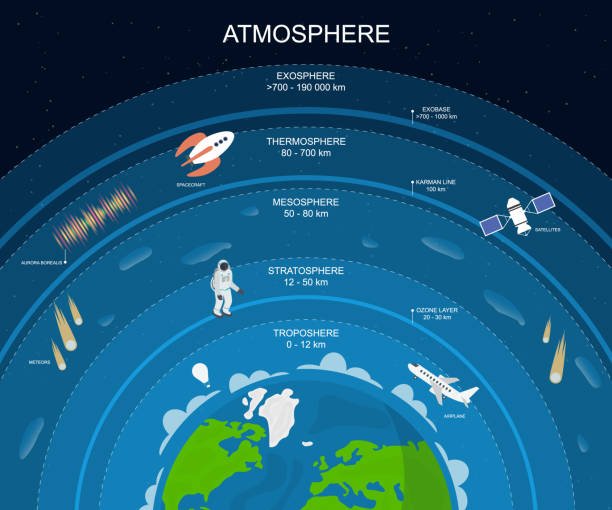
First of all, do you know what a stratosphere is? The stratosphere is the second layer of the Earth’s atmosphere, located above the troposphere (the layer closest to the Earth’s surface) and below the mesosphere. It extends from an altitude of about 10 km (6.2 miles) to 50 km (31 miles) above the Earth’s surface.

Video Lesson: The Layers Of Atmosphere

The Layers Of Atmosphere Video Lesson

The stratosphere is characterized by its relatively stable and dry air, as well as its lack of weather patterns and storms. This layer of the atmosphere also contains the ozone layer, which protects the Earth from harmful ultraviolet (UV) radiation from the sun.

The air temperature in the stratosphere increases with altitude, due to the absorption of UV radiation by ozone. The wind in the stratosphere is also relatively stable, with the exception of the jet streams, which are high-speed winds that flow from west to east.

The stratosphere is also home to a number of important atmospheric processes, including the formation of ozone, the formation of polar stratospheric clouds, and the distribution of atmospheric trace gases.

In addition to being a vital layer for the Earth’s atmosphere and climate, the stratosphere is also used for commercial and military aviation. Long-distance aircraft often fly in the lower part of the stratosphere, because it offers a more stable flight and more efficient fuel consumption.

Overall, the stratosphere is an important layer of the Earth’s atmosphere that plays a vital role in protecting the planet from harmful UV radiation and regulating the Earth’s climate.

7 Reasons Why long-distance Aircraft Choose to Fly in the Lower Part of the Stratosphere

There are several reasons why long-distance aircraft choose to fly in the lower part of the stratosphere:

7 Reasons Why long-distance Aircraft Choose to Fly in the Lower Part of the Stratosphere
  1. Altitude: The lower part of the stratosphere is located at an altitude of around 20,000 to 30,000 feet. This altitude is high enough to avoid most of the turbulence and storms that occur in the troposphere (the layer of the atmosphere closest to the earth), but it is still low enough for the aircraft to have a relatively stable flight.
  2. Air density: The air density in the lower part of the stratosphere is also relatively low, which means that the aircraft can fly more efficiently and use less fuel.
  3. Weather: The lower part of the stratosphere is generally free of the weather patterns and storms that occur in the troposphere. This means that aircraft flying in this layer of the atmosphere can avoid disruptions caused by bad weather and can fly more smoothly.
  4. Jet Streams: The lower part of the stratosphere is also home to the jet streams, which are high-speed winds that can help aircraft fly faster and more efficiently. These winds can help aircraft reach their destinations faster, reducing travel time and fuel costs.
  5. Air Traffic: The lower part of the stratosphere is also less congested than the airspace at lower altitudes, which means that aircraft can fly more freely and avoid delays caused by air traffic.
  6. Cost: Because of the benefits mentioned above, flying in the lower part of the stratosphere can be more cost-effective for long-distance aircraft. They can save fuel, avoid bad weather, and reach their destinations faster, which can lead to significant cost savings.
  7. Environmental Impact: Flying in the lower part of the stratosphere also has a lower environmental impact than flying at higher altitudes. The lower air density in this layer of the atmosphere means that aircraft can emit less carbon dioxide and other pollutants.

It’s important to note that these reasons are speculative, and any practical implementation of such concepts would involve addressing numerous technical, operational, and safety challenges. As aviation technology advances, it’s possible that new approaches and altitudes for long-distance flight may emerge.

The wind belt that causes the easterly movement of the mid-latitude cyclone

The wind belt that causes the easterly movement of the mid-latitude cyclone Nature’s intricate dance often unfolds in mysterious ways, and one such phenomenon that captivates meteorologists and weather enthusiasts alike is the easterly movement of mid-latitude cyclones. At the heart of this atmospheric ballet lies the wind belt, a crucial force propelling these dynamic weather systems across vast distances. In this exploration, we delve into the workings of the wind belt and its role in orchestrating the mesmerizing easterly migration of mid-latitude cyclones.

There are several different wind belts on Earth, each associated with a different region and set of weather conditions. Some examples include:

  • The trade winds, which blow from east to west near the equator and are associated with clear, sunny weather.
  • The westerlies, which blow from west to east in the middle latitudes and are associated with the movement of mid-latitude cyclones.
  • The polar easterlies, which blow from east to west near the poles and are associated with cold, snowy weather.

Each wind belt plays a crucial role in shaping the weather patterns and climate of the regions where it is found.

Video Lesson: Geography Lesson – Climatology (Mid-latitude Cyclones)

Geography Lesson – Climatology (Mid-latitude Cyclones)

Which wind belt causes the easterly movement of the mid-latitude cyclone?

The wind belt that causes the easterly movement of the mid-latitude cyclone is known as the westerly wind belt. This wind belt is located in the middle latitudes, between 30 and 60 degrees north and south of the equator, and is characterized by west-to-east winds that blow primarily from the west.

One of the key factors that drives the movement of the mid-latitude cyclone is the difference in air pressure between the poles and the tropics. The poles are characterized by a high-pressure system, while the tropics have a low-pressure system. As the warm, moist air from the tropics moves towards the poles, it is forced to rise and cool, creating a low-pressure system. This low-pressure system then moves towards the east, driven by the westerly wind belt.

The wind belt that causes the easterly movement of the mid-latitude cyclone is known as the westerly wind belt. This wind belt is located in the middle latitudes, between 30 and 60 degrees north and south of the equator, and is characterized by west-to-east winds that blow primarily from the west.

Examples of mid-latitude cyclones include nor’easters along the east coast of North America, European windstorms, and the storms that bring heavy rain and snow to the Pacific Northwest of the United States.

Historically, the westerly wind belt has been a key factor in the movement of storms throughout the middle latitudes. For example, in the early 20th century, the “Storm King” of the United States, meteorologist Cleveland Abbe, used observations of the westerly wind belt to predict the movement of storms and improve weather forecasting.

How Ocean Currents Play a Role in Restoring the Energy Balance between the Equator and Poles

How Ocean Currents Play a Role in Restoring the Energy Balance between the Equator and Poles Ocean currents play a crucial role in redistributing heat around the Earth, helping to restore the energy balance between the equator and the poles. The movement of ocean water is driven by various factors, including wind, temperature, salinity, and the Earth’s rotation.

How Ocean Currents Play a Role in Restoring the Energy Balance between the Equator and Poles

Ocean Currents

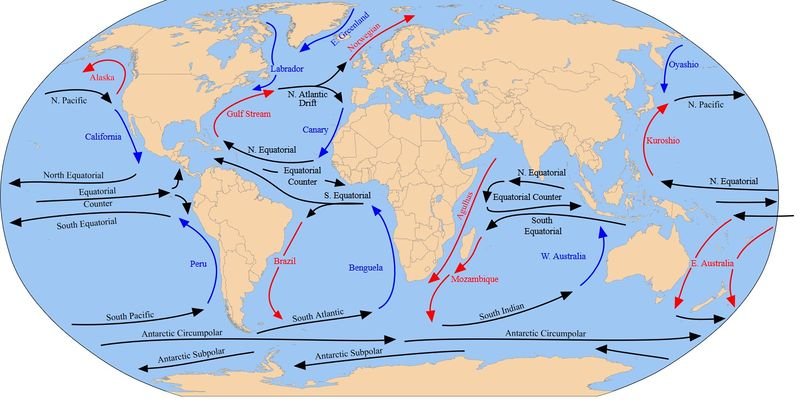
  • One of the most important ocean currents is the Gulf Stream. This current begins in the Gulf of Mexico and flows northwards along the east coast of North America, before crossing the Atlantic and reaching Europe. The Gulf Stream carries warm water from the tropics to the northern latitudes, where it releases its heat and cools down. This helps to keep Europe warmer than it would be otherwise, and is why the United Kingdom and Ireland have a milder climate than other places at the same latitude.
  • Another important ocean current is the Kuroshio Current, which flows along the east coast of Japan. This current carries warm water from the tropics to the northern latitudes, helping to keep Japan warmer than it would be otherwise.
  • The Agulhas Current is an ocean current that flows along the east coast of South Africa. This current carries warm water from the tropics to the southern latitudes, helping to keep South Africa and the surrounding region warmer than it would be otherwise.
  • The Antarctic Circumpolar Current is an ocean current that flows around Antarctica. This current carries cold water from the poles to the tropics, helping to keep the poles colder than they would be otherwise.

Here’s how ocean currents contribute to maintaining a balance in energy distribution:

  1. Heat Transport:
    • Equator to Poles: Near the equator, the Sun’s rays are more direct, leading to higher temperatures. The ocean absorbs this heat, and the warm water is transported towards higher latitudes by surface currents.
    • Poles to Equator: At higher latitudes, especially near the poles, the ocean loses heat to the atmosphere. Cold, dense water then flows back towards the equator along deeper currents.
  2. Global Conveyor Belt:
    • Ocean currents are interconnected in a system known as the “global conveyor belt” or thermohaline circulation. This circulation is driven by differences in water temperature and salinity.
    • Warm surface currents move poleward, and as they cool, they become denser and sink. This sinking initiates a deep-ocean flow that eventually returns towards the equator.
  3. Winds and Ekman Transport:
    • Surface winds influence the movement of ocean water through a process called Ekman transport. These winds create surface currents that are deflected by the Coriolis effect, leading to the generation of large-scale gyres.
    • These gyres help transport warm water towards the poles and cold water towards the equator, contributing to the overall redistribution of heat.
  4. Equatorward Transport of Cold Water:
    • Deep ocean currents also transport cold water from higher latitudes towards the equator. This helps offset the excess heat near the equator and contributes to a more balanced energy distribution.
  5. Effect on Climate:
    • Ocean currents have a significant impact on regional climates. For example, the Gulf Stream, a warm ocean current in the North Atlantic, helps moderate temperatures in Western Europe, making it milder than other regions at similar latitudes.
  6. Sea Ice Formation:
    • In polar regions, cold currents contribute to the formation of sea ice. This ice reflects sunlight, reducing the amount of solar energy absorbed by the ocean in these areas and helping to maintain a temperature contrast between the poles and the equator.

Conclusion

By facilitating the movement of heat across the globe, ocean currents play a vital role in maintaining the Earth’s energy balance. This has implications for climate, weather patterns, and the overall functioning of the Earth’s climate system. Disruptions to these ocean circulation patterns can have significant consequences for global climate and weather.


The 5 Main Causes of Ocean Currents? Geography Lesson

The 5 Main Causes of Ocean Currents? Geography Lesson Ocean currents are large-scale flows of seawater within the ocean. These currents play a crucial role in regulating the Earth’s climate by redistributing heat around the globe. There are several factors that contribute to the formation and movement of ocean currents.

The 5 Main Causes of Ocean Currents? Geography Lesson

Here are the five main causes of Ocean Currents:

  1. Wind: Wind is one of the primary drivers of surface ocean currents. The friction between the wind and the surface of the water causes the water to move. The direction and strength of the wind influence the direction and speed of the ocean currents. Trade winds, westerlies, and polar easterlies are major wind belts that affect the oceans.
  2. Coriolis Effect: The rotation of the Earth influences the direction of ocean currents through the Coriolis effect. As the Earth rotates, the Coriolis effect causes moving air and water to be deflected to the right in the Northern Hemisphere and to the left in the Southern Hemisphere. This deflection influences the paths of ocean currents, creating large gyres in each hemisphere.
  3. Temperature and Density: Variations in temperature and density of seawater also contribute to the formation of ocean currents. Warmer water is less dense than colder water, and differences in density can drive the vertical and horizontal movement of ocean water. For example, when warm water flows from the equator toward the poles, it cools and becomes denser, sinking and forming deep ocean currents.

DON’T MISS: How to Pass Geography Grade 12 NSC With Distinction

  1. Topography of the Ocean Floor: The shape and features of the ocean floor, such as underwater mountain ranges and trenches, can influence the direction and strength of ocean currents. These features can deflect and channel the flow of water, creating specific current patterns.
  2. Continental Boundaries: The presence of continents can obstruct the smooth flow of ocean currents, leading to the formation of boundary currents along the edges of the continents. These currents flow parallel to the coastlines and are influenced by the Earth’s rotation and the shape of the coastline.

Video:What Causes Ocean Currents

Wrap Up

Understanding these factors helps scientists predict and explain the complex patterns of ocean currents observed around the world. Ocean currents are essential for regulating the distribution of heat and nutrients in the ocean, influencing marine life and climate patterns on a global scale.


Four Factors that make the Troposphere Perfect for Life on Earth

Four Factors that make the Troposphere Perfect for Life on Earth The troposphere, the lowest layer of Earth’s atmosphere, plays a crucial role in supporting life on our planet. Several factors contribute to making the troposphere perfect for sustaining life

Four Factors that make the Troposphere Perfect for Life on Earth

Importance of troposphere to life on earth

  • The study of the troposphere is very important because we breathe the air in this layer of air.
    The troposphere contains about 85% of the atmosphere’s total mass. Tropospheric processes, such as the water or hydrologic cycle (the formation of clouds and rain) and the greenhouse effect, have a great influence on meteorology and the climate.
  • The chemical composition determines the air quality. Certain components, even if they are only present in small amounts, may harm health and vegetation.

Therefore, it is of utmost importance to understand how the activities of humans influence the troposphere.

The troposphere has a direct contact with the Earth’s surface

The troposphere has a direct contact with the Earth’s surface. It is therefore very sensitive to processes occurring at this level, like:

  • evaporation of oceans
  • photosynthesis in plants
  • respiration of living creatures
  • human activities

Temperature decrease with altitude in troposphere

The troposphere differs from the stratosphere by the usually more rapid mixing of tropospheric air. One says that the troposphere is “turbulent”. This turbulence is partly connected to the “thermal profile” of the troposphere: the temperature decreases with the altitude, at an average of 6°C per kilometre.

This phenomenon favours the fast convection of air from the lowest layers to higher altitudes in the troposphere. This convection goes hand in hand with the formation of clouds, the so-called convective clouds.

Troposphere is protected from hard UV radiation

Furthermore, the troposphere is protected from the hard ultraviolet radiation of the Sun by the higher layers of the atmosphere, namely by the stratospheric ozone layer. Because of this protection, many molecules are more stable in the troposphere then elsewhere in the atmosphere. This protection makes life possible on Earth.

Four Factors that make the Troposphere Perfect for Life on Earth

  1. Oxygen-rich Atmosphere:
    • The troposphere contains the highest concentration of oxygen compared to other atmospheric layers. Oxygen is essential for the respiration of most living organisms, including humans. Through a complex process involving photosynthesis by plants and other photosynthetic organisms, oxygen is produced and released into the atmosphere, creating a breathable environment for aerobic life forms.
  2. Moderate Temperature Range:
    • The troposphere experiences a relatively moderate temperature range compared to higher atmospheric layers. As you move upward in the atmosphere, temperatures generally decrease. The troposphere’s temperature range allows for the existence of liquid water, a critical factor for life as we know it. The presence of liquid water is essential for various biological processes, including metabolism and the facilitation of chemical reactions necessary for life.
  3. Protection from Harmful Solar Radiation:
    • The troposphere helps shield Earth’s surface from harmful solar radiation, particularly the majority of ultraviolet (UV) radiation. The ozone layer, which is primarily located in the stratosphere but has effects on the troposphere, absorbs and filters out a significant portion of the Sun’s harmful UV radiation. This protection is crucial for preventing excessive radiation exposure, which can be detrimental to living organisms.
  4. Dynamic Circulation Patterns:
    • The troposphere is characterized by dynamic atmospheric circulation patterns, including convection currents and weather systems. These patterns contribute to the distribution of heat, moisture, and gases, creating a relatively stable and habitable environment. The movement of air and the occurrence of weather phenomena help regulate temperature and maintain a balance in the Earth’s climate, preventing extreme temperature fluctuations that could be harmful to life.

Troposphere Exam Questions and Answers

Troposphere Exam Questions and Answers:

Questions:

  1. Why is the temperature in the troposphere suitable for life?
  2. How does water vapor in the troposphere support life on Earth?
  3. How much oxygen is in the troposphere?
  4. What role does the troposphere play in protecting life on Earth?

DON’T MISS: How to Pass Geography Grade 12 NSC With Distinction

Answers:

  1. The temperature in the troposphere decreases with altitude, which allows for a range of temperatures suitable for life, as well as weather patterns that support the growth of plants and animals.
  2. Water vapor in the troposphere supports life on Earth by forming clouds and precipitation, and helping to regulate temperature by trapping heat from the sun.
  3. The troposphere contains about 21% oxygen, which is essential for the survival of most living organisms.
  4. The troposphere acts as a protective layer, shielding life on Earth from harmful ultraviolet radiation from the sun and meteoroids.

Conclusion

In summary, the combination of an oxygen-rich atmosphere, a moderate temperature range, protection from harmful solar radiation, and dynamic circulation patterns makes the troposphere an ideal layer for supporting and sustaining life on Earth. These factors contribute to the habitability of our planet and provide the necessary conditions for the diverse ecosystems that exist.

Why do Cartographers only name some of the contour lines on maps

Why do Cartographers only name some of the contour lines on maps Contour lines on maps represent lines of constant elevation and help visualize the shape and terrain of the land. Cartographers choose to label only some contour lines for practical reasons related to readability and clarity.

Why do Cartographers only name some of the contour lines on maps

Here are some reasons why not all contour lines may be labeled:

  1. Density and Clutter: If every contour line were labeled, the map would become cluttered and difficult to read. This could lead to confusion and make it challenging for users to interpret the map accurately.
  2. Scale of the Map: In maps covering large areas, such as regional or world maps, it may not be feasible or necessary to label every contour line. Labels may be reserved for major elevation changes or key topographic features to maintain readability.
  3. Topographic Emphasis: Cartographers may choose to label contour lines that represent significant changes in elevation or highlight important topographic features such as mountain peaks, valleys, or ridges. This selective labeling helps users focus on crucial details.
  4. Cartographic Design: The primary goal of a map is to communicate information effectively. Cartographers use design principles to create visually appealing and informative maps. Selective labeling of contour lines is part of this design process.
  5. User Needs: Different users may have different needs when consulting a map. Some may be interested in specific elevation changes, while others may only need a general understanding of the terrain. Selective labeling caters to various user preferences and requirements.

DON’T MISS: How to Pass Geography Grade 12 NSC With Distinction

  1. Space Constraints: In maps with limited space, such as in atlases or smaller-scale maps, there may not be enough room to label every contour line without sacrificing readability. Cartographers prioritize key information within the available space.

Video Lesson: Contour Map / Topographic Map Reading

Examples of when contour lines are named on maps include:

  1. Topographic maps, which typically name the index contour lines (every fifth line) to indicate changes in elevation.
  2. Maps of mountainous or hilly areas, where contour lines are used to indicate steep gradients and mountain peaks.
  3. Maps of coastlines, where contour lines are used to indicate changes in elevation and the presence of cliffs or other features.

Wrap Up

In summary, cartographers make decisions about which contour lines to label based on a combination of design principles, the scale of the map, user needs, and the goal of providing clear and readable information about the terrain.