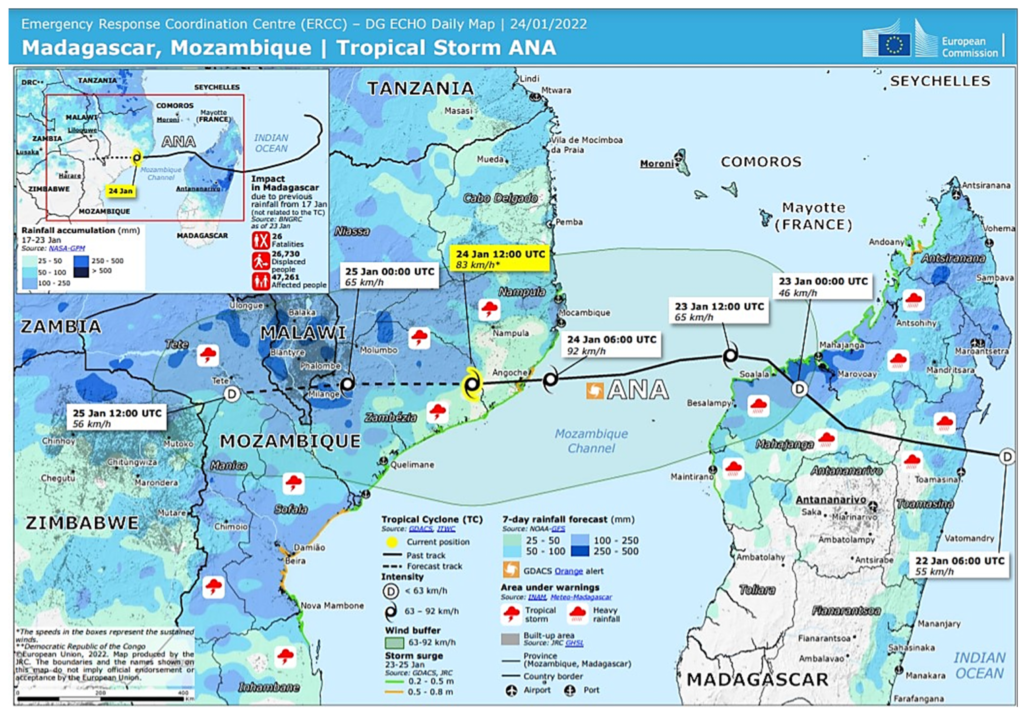
The Path of the Tropical Cyclone Ana: Satellite Image Map The tropical storm Ana formed over the Indian Ocean started moving westwards, passing over northern Madagascar and crossed over to Mozambique and subsequently reached Malawi, Zambia and Zimbabwe. The tropical storm then made landfall on the 24th of January 2022 in the five countries.
The Path of the Tropical Cyclone Ana: Satellite Image Map
On Tuesday, January 22nd, 2022, the tropical storm named Ana took shape over the Indian Ocean. It began to move westwards, passing over northern Madagascar, then crossing over to Mozambique, and subsequently reaching Malawi, Zambia, and Zimbabwe. The cyclone made landfall on the 24th of January, wreaking havoc in five countries.
ANA’s path was characterized by heavy rainfall and strong winds that caused rivers to overflow. The ensuing floods and landslides resulted in casualties and widespread damage over the entire northern area of Mozambique. Public infrastructure, including healthcare facilities and homes, were severely impacted, causing interruptions to basic services and healthcare deliveries to the affected people.
As of January 27, 2022, the disaster had displaced over 121,000 people across the provinces of Niassa, Nampula, Zambézia, Tete, Sofala, and Manica. Reports confirmed 20 deaths and 196 injuries. ANA made its initial landfall in Angoche district, Nampula province on 24th January, then continued westwards, significantly affecting Zambezia and Tete provinces.
In Madagascar, the storm claimed at least 48 lives, and 130,000 people were forced to seek refuge in temporary shelters. Malawi, too, suffered extensive damage to public infrastructure, including healthcare facilities and homes, resulting in interruptions to basic services and healthcare deliveries. The disaster displaced 49,214 people, including those living with disabilities, women, and children. 107 people were hospitalized with serious injuries, and 11 deaths were reported. A nationwide power cut added to the crisis, and some regions were declared disaster zones.
In response, the Government of Malawi declared a state of emergency in the affected region and called for a humanitarian response to manage the crisis. Zimbabwe and Zambia, while battered by the torrential rainfalls, floods, and strong winds of Tropical Storm Ana, suffered comparatively less damage.
By January 28, 2022, a total of 77 fatalities and over 300,000 displaced people had been reported. The aftermath of the disaster has raised concerns about water hygiene and sanitation-related diseases such as cholera and typhoid. The ongoing COVID-19 pandemic coupled with the destruction of health infrastructure has further limited access to essential health services, such as immunization and other clinical services. This situation presents a high potential risk for additional health consequences, including increased mortalities.
The African Union Commission (AUC) is closely monitoring the situation. The Africa Centres for Disease Control and Prevention (Africa CDC) has held an emergency meeting with the Africa CDC Southern and Eastern Africa Regional Collaborating Centres (RCCs) to assess the situation and plan immediate next steps. The AUC and Africa CDC are preparing to deploy technical assistance from the Headquarter and the RCCs and will continue to work with the governments of the affected countries to provide more emergency response support, supplies, and equipment as needed. Africa CDC is also coordinating with all partners to align emergency response activities across the region
Drought in KZN: Hypothesis and Background Information. Drought is a recurring natural phenomenon that poses significant challenges to agricultural productivity, water resources, and socioeconomic stability in various regions around the world. The province of KwaZulu-Natal (KZN) in South Africa has been grappling with severe drought conditions, leading to adverse consequences for both rural and urban communities. This article aims to provide an overview of the drought situation in KZN, explore potential hypotheses to understand its causes and implications, and highlight the need for further research and intervention measures.
Drought in KZN: Background Information
KZN, known for its diverse landscapes and agricultural activities, has experienced a prolonged period of water scarcity in recent years. According to The Citizen (2019), the province endured a crippling drought that severely affected farming communities, leading to livestock losses and reduced crop yields. The devastating impact of the drought was also emphasized in a Business Live article (2019), which described it as “devastating” and highlighted the challenges faced by the agricultural sector.
The consequences of drought extend beyond agriculture, impacting water supply, ecosystems, and human well-being. The prolonged water scarcity has strained water resources, leaving communities vulnerable to water shortages and affecting hygiene, sanitation, and overall quality of life. To address these challenges, the KZN provincial government announced plans in 2015 to tackle the prolonged drought (Government of South Africa, 2015). However, a comprehensive understanding of the causes and mechanisms behind the drought is essential for effective mitigation and adaptation strategies.
To better comprehend the causes and implications of the drought in KZN, various hypotheses can be formulated for further investigation. Here are ten potential hypotheses worth exploring:
Climate Change: The drought in KZN may be linked to long-term climate change patterns, resulting in altered precipitation patterns and increased aridity (Smith et al., 2020).
El Niño Southern Oscillation (ENSO): Changes in ENSO phases, particularly El Niño events, could contribute to reduced rainfall and increased drought frequency in KZN (Mdletshe et al., 2021).
Land Use and Land Cover Change (LULCC): Human activities, such as deforestation, urbanization, and agricultural expansion, may have modified the regional hydrological cycle, exacerbating drought conditions (Makhanya et al., 2023).
Water Management Practices: Inefficient water resource management and lack of infrastructure may have contributed to water scarcity and exacerbated the impact of the drought (Govender et al., 2019).
Soil Degradation: Degraded soils due to erosion, inappropriate land management practices, and poor soil health may have reduced water-holding capacity and increased vulnerability to drought (Mnkeni et al., 2022).
Natural Variability: Droughts in KZN could be attributed to natural climatic variability, including periodic shifts in atmospheric circulation patterns (Zulu et al., 2018).
Groundwater Depletion: Excessive groundwater extraction for irrigation and domestic purposes might have contributed to declining water tables and reduced water availability during drought periods (Ndebele-Murisa et al., 2021).
Water Demand and Population Growth: Increasing water demand due to population growth, urbanization, and expanding industries could strain water resources, exacerbating drought conditions (Sibiya et al., 2020).
Hydrological Changes: Alterations in river flow patterns, such as reduced runoff and streamflow, may be influencing water availability and contributing to drought (Sithole et al., 2023).
Climate Teleconnections: Connections between regional climate systems and large-scale atmospheric phenomena, such as the Indian Ocean Dipole or Atlantic Multidecadal Oscillation, could potentially influence rainfall patterns and contribute to drought conditions in KZN (Nkosi et al., 2023).
It is important to note that these hypotheses are not exhaustive and further research is needed to validate and explore their significance in the context of KZN’s drought. Understanding the underlying causes of the drought is crucial for developing effective strategies to mitigate its impacts and enhance the region’s resilience.
The drought in KZN has had severe implications for agriculture, water resources, and overall well-being in the region. With various factors potentially contributing to the occurrence and persistence of the drought, formulating hypotheses can provide a foundation for scientific investigation and policy formulation. By examining the interplay of climate change, natural variability, land use practices, and water management, among other factors, researchers can shed light on the underlying mechanisms of the drought and guide sustainable interventions to alleviate its effects.
Need Help with your School Project?
Are you struggling with your Project? Well, we can help you in terms of answering the questions and learning the key objectives of the topics. Please upload the pdf document of the Project and we will ensure we help you with the answering guide so that you pass it with distinctions.
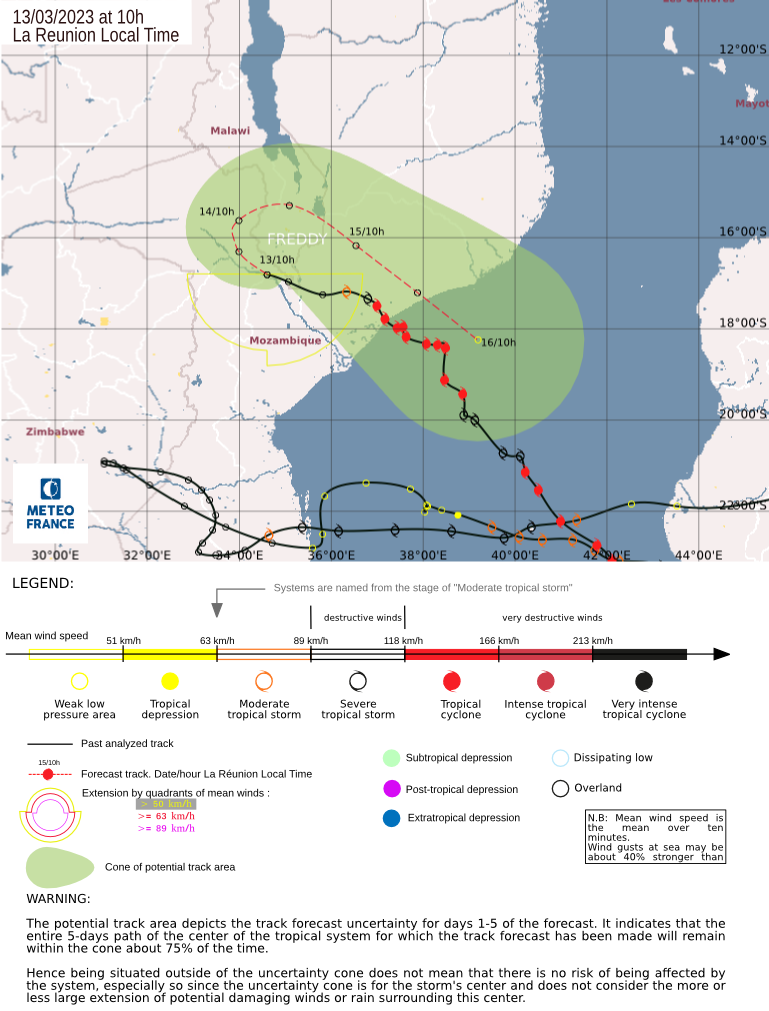
The Path of the Tropical Cyclone Freddy: Satellite Image Map Tropical cyclones are one of nature’s most powerful and destructive weather phenomena. These massive storms, known as hurricanes in the Atlantic and typhoons in the Pacific, can cause widespread devastation in their path. Understanding the path of a tropical cyclone is crucial for effective disaster management and preparedness. In this article, we will explore the significance of satellite image maps in tracking the path of these storms, focusing on the case of Tropical Cyclone Freddy.
The Path of the Tropical Cyclone Freddy: An Unprecedented Journey Across the South Indian Ocean:
The World Meteorological Organization (WMO) is convening an expert committee to assess if Tropical Cyclone Freddy has shattered the record as the longest-lasting cyclone ever recorded. Freddy, named a tropical cyclone for an impressive 34 days, traveled over 8,000 kilometers across the entire South Indian Ocean. The accumulated cyclone energy, an index measuring the energy released by a tropical cyclone, is on par with an average full North Atlantic hurricane season.
While the storm has had major socio-economic and humanitarian impacts, the death toll has been mitigated by accurate early warnings from National Meteorological and Hydrological Services. Their coordinated efforts on the ground with disaster management teams have been instrumental in preventing a greater loss of life, highlighting the critical role of Early Warnings for All. Initial unconfirmed reports suggest a death toll of 190.
The Path of the Tropical Cyclone Freddy: Satellite Image Map
Freddy’s Path of Destruction
Making landfall in northern Mozambique, in the province of Zambezia, on 11 March, this marked Freddy’s second landfall in the country, according to the National Meteorological Hydrological Service (INAM). The storm has brought destructive winds, storm surge, and extreme rainfall to large areas including Northeast Zimbabwe, Southeast Zambia, Malawi, and Mozambique.
Expected total rainfall amounts are between 200 to 300 mm, and as much as 400-500 mm over the landing area of Mozambique and in the mountainous regions. This is more than twice the usual monthly rainfall in just a few days, likely leading to severe floods.
Malawi is bracing for cumulative rainfall of more than 300 to 400 mm in 48 hours, leading to widespread flooding and flash floods. Malawi’s Department of Climate Change and Meteorological Services has urged people to relocate to higher ground, heed evacuation orders, and avoid rivers. They warn of the potential collapse of houses and pit latrines, and damaged power lines.
The ongoing rainfall exacerbates the flooding caused by Freddy’s first passage and heavy seasonal rains, which have already saturated the ground and filled rivers. Southern Mozambique has received over a year’s worth of rainfall in the past month, and Madagascar experienced three times the monthly average in just a week.
Freddy first made landfall in Madagascar on 21 February, and then in Southern Mozambique on 24 February. It spent several days tracking over Mozambique and Zimbabwe, causing heavy rains and flooding. It then looped back towards the Mozambique Channel, gaining energy from the warm waters and heading towards the south-western coast of Madagascar, before returning to Mozambique.
Early Warnings for All
“Freddy is having a major socio-economic and humanitarian impact on affected communities. The death toll has been limited by accurate forecasts and early warnings, and coordinated disaster risk reduction action on the ground – although even one casualty is one too many,” said Dr. Johan Stander, WMO Services Director.
“This once again underlines the importance of the UN Early Warnings for All initiative to ensure that everyone is protected in the next five years. WMO is committed to working with our partners to achieve this and tackle extreme weather and climate change-related risks – one of the biggest challenges of our times,” he added.
Advanced warnings by WMO’s Regional Specialized Meteorological Centre La Réunion (Meteo-France) and the national meteorological and hydrological services of Madagascar, Mozambique, and Malawi allowed for timely mobilization of disaster management and humanitarian communities. This preparedness enabled evacuations and pre-positioning of food supplies.
A Record-Breaking Storm?
From a meteorological perspective, Freddy is a truly remarkable storm. The Australian Bureau of Meteorology, a WMO regional centre, named Freddy on 6 February while it was still a few hundred kilometers off the northwest coast of Australia. From there, Freddy charted a course across the entire Indian Ocean from east to west, affecting Mauritius and La Réunion on its epic journey to Madagascar. Such an extended zonal track is exceptionally rare, with the most recent recorded cases being Tropical Cyclones Leon-Eline and Hudah, both in 2000, another la Niña year like 2023.
The WMO is closely monitoring Freddy’s progress to determine if it will establish a new record as the longest-lasting tropical cyclone. An investigation by the WMO Weather and Climate Extremes evaluation committee is expected to commence after the cyclone has dissipated.
“The WMO Weather and Climate Extremes Archive are currently assembling a blue-ribbon international committee of scientists. Once the tropical cyclone has dissipated, these experts will begin a detailed examination of the raw data to determine if Freddy has indeed established a record as the longest-duration tropical cyclone on record. One question that we will be addressing is the fact that throughout its long lifetime, the storm has periodically weakened below tropical storm status. We will obviously need to address if that is a concern in our evaluation,” said Prof. Randall Cerveny, WMO Weather and Climate Extremes rapporteur.
“Our evaluations are detailed scientific inquiries so they do take time,” he added.
The current record is held by Hurricane/Typhoon John, which lasted 31 days in 1994. According to NASA, Freddy has set the record for the highest accumulated cyclone energy (ACE) of any southern hemisphere storm in history.
“World record or not, Freddy will remain an exceptional phenomenon for the history of the South-West Indian Ocean on many aspects: longevity, distance covered, remarkable maximum intensity, accumulated cyclone energy (ACE) amount, impact on inhabited lands … but it will be necessary to wait until the system ends its life cycle to make an exhaustive assessment,” said Sebastien Langlade, Head of Operations at RSMC La Réunion.
The Role of Climate Change
The Intergovernmental Panel on Climate Change (IPCC) has reported observed and projected increases in heavy precipitation and pluvial flooding for East Southern Africa and Madagascar. They predict an increase in average tropical cyclone wind speeds, along with associated heavy precipitation and a rise in the proportion of category 4-5 tropical cyclones.
Rising mean sea levels globally will contribute to higher extreme sea levels associated with tropical cyclones. Coastal hazards will be exacerbated by an increase in the average intensity, magnitude of storm surge, and precipitation rates of tropical cyclones. While there is low confidence in changes in the future frequency of tropical cyclones at the global scale, the journey of Tropical Cyclone Freddy and its potential record-breaking duration serve as stark reminders of the changing face of our planet’s weather systems
How Tropical Cyclone Eloise Impacted the Economy of Mozambique In the annals of natural disasters, the name Tropical Cyclone Eloise etches a painful chapter in the history of Mozambique. This formidable force of nature, which made landfall in January 2021, not only left a trail of destruction in its wake but also cast a dark shadow over Mozambique’s economic landscape.
How Tropical Cyclone Eloise Impacted the Economy of Mozambique: In January 2021, Tropical Cyclone Eloise wreaked havoc on Mozambique, causing widespread destruction and impacting the country’s economy. Eloise struck less than two years after Cyclone Idai, making the situation even more challenging for the people and government of Mozambique. The cyclone damaged critical infrastructure, farmland, and thousands of homes, leading to severe economic implications for a country where nearly half the population lives below the poverty line. The urgent humanitarian needs escalated post-cyclone, with around 250,000 people, including 130,000 children, likely requiring assistance. UNICEF has been a significant player in responding to this crisis, providing immediate relief to the affected communities and assisting in the recovery process. This paper discusses the economic impacts of Tropical Cyclone Eloise and the critical role UNICEF has played in mitigating these impacts and supporting recovery efforts.
How Tropical Cyclone Eloise Impacted the Economy of Mozambique
Tropical Cyclone Eloise, which hit Mozambique in January 2021, had a significant impact on the country’s economy, primarily through the following channels:
Agricultural Losses: The cyclone led to the flooding of tens of thousands of hectares of crops, which could significantly impact the next harvest in April. This could potentially lead to food shortages and higher food prices, affecting food security and increasing the cost of living for many families. In the longer term, these agricultural losses could lead to reduced agricultural output and productivity, impacting the rural economy and potentially leading to an increase in rural-urban migration.
Infrastructure Damage: The storm damaged and destroyed vital infrastructure, including roads, which could have significant economic implications. Damaged roads can disrupt transportation and trade, hindering economic activity and potentially leading to increases in commodity prices. The cost of repairing or replacing the damaged infrastructure could also place a significant burden on the government’s budget.
Housing Destruction: Thousands of homes were damaged or destroyed by the storm, displacing many families. The cost of repairing or rebuilding these homes could be significant, and many families may not have the resources to do so. This could potentially lead to an increase in homelessness and poverty.
Disruption of Services: The cyclone disrupted basic services, affecting families’ access to healthcare, safe drinking water, and other essential services. The cost of restoring these services could be substantial, and the disruption could have significant social and economic impacts, including potential increases in disease and mortality, decreased productivity, and reduced quality of life.
Increase in Humanitarian Needs: The cyclone has increased the need for humanitarian assistance, with around 250,000 people, including 130,000 children, likely to need help. Providing this assistance could require significant resources, potentially diverting funds from other areas of the economy.
These economic impacts are likely to be particularly severe given that nearly half of the population was living below the poverty line even before the cyclone struck. The economic slowdown related to COVID-19, the ongoing conflict in Cabo Delgado, and the impacts of previous shocks such as Cyclone Idai have further exacerbated the country’s economic vulnerabilities.
UNICEF’s Response
UNICEF has been playing a crucial role in the response to Cyclone Eloise, helping to mitigate some of its economic impacts by providing immediate relief and support to the affected communities. This includes providing shelter, medical supplies, hygiene kits, and safe drinking water, which can help to prevent the spread of waterborne diseases. By helping to meet these immediate needs, UNICEF is contributing to the recovery effort and helping to prevent further economic deterioration. In the longer term, UNICEF’s work to assess needs, prioritize support, and protect children can help to support the country’s social and economic recovery.
Conclusion:
Tropical Cyclone Eloise left an indelible mark on Mozambique, testing the nation’s mettle and resilience. The economic toll, though substantial, spurred collaborative efforts for recovery and reconstruction. As Mozambique continues on its path to rebuilding, the lessons learned from Eloise’s impact will serve as a blueprint for a more resilient and robust future. The story of Mozambique’s recovery is a testament to the strength of its people and the solidarity of the international community in times of crisis.
Rural Depopulation in Limpopo: Hypothesis Rural depopulation in Limpopo, or any region, can be influenced by various factors. It’s important to note that a hypothesis is a speculative statement that suggests a relationship between variables.
Creating a hypothesis is a crucial step in the scientific process and research studies. A hypothesis is a proposed explanation for an observed phenomenon. It should be testable and falsifiable, meaning it can be supported or refuted through experimentation or more observation.
NB: This is for guidance purposes ONLY. Learners should consult their prescribed learning material as a primary for any school assessments.Our content is not a prescribed memorandum, but a general knowledge.
In the context of your study on rural depopulation in Limpopo, your hypothesis should pertain to potential causes or consequences of this phenomenon. Here is a guide on how you might generate a hypothesis for your topic:
Identify the Problem: The first step is to clearly state the problem or the observation you’ve made. In this case, the problem is rural depopulation in Limpopo.
Do Some Preliminary Research: Look at some of the existing literature on rural depopulation, not just in Limpopo, but in similar regions as well. Try to understand what factors have been identified as causes or effects of rural depopulation elsewhere.
Ask Questions: Based on your preliminary research, ask questions about the possible causes or effects of rural depopulation in Limpopo. For example, you might ask, “What is the role of economic factors in rural depopulation?” or “How does rural depopulation affect community structure and social ties in Limpopo?”
Formulate a Hypothesis: Now it’s time to turn your question into a testable statement. A hypothesis should be clear, concise, and answer your research question. For example, if your question was about the role of economic factors in rural depopulation, your hypothesis might be “Rural depopulation in Limpopo is primarily driven by the lack of economic opportunities.”
Ensure Your Hypothesis is Testable: Your hypothesis should be something you can test with the resources you have. Make sure you can gather sufficient data to support or refute your hypothesis. In the above example, you could test this hypothesis by surveying residents about their reasons for leaving, collecting data on job opportunities in rural versus urban areas, or examining population and economic trends over time.
Refine Your Hypothesis: Based on the data you can feasibly collect, you may need to refine your hypothesis further. This might involve narrowing the focus or specifying the conditions under which your hypothesis is true.
Prepare for Testing: Once you’ve settled on a testable, refined hypothesis, you can prepare for the next steps in your research. This might involve designing a survey, preparing to collect data, or outlining the methods you’ll use to analyze your data.
Remember, a hypothesis does not need to be proven correct to be useful. In fact, a hypothesis that is shown to be incorrect can still provide valuable information and lead to further questions and research. The key is to develop a hypothesis that contributes to your understanding of the phenomenon you’re studying.
10 Examples of Hypothesis on Rural Depopulation in Limpopo
Sure, here are 10 examples of hypotheses related to rural depopulation in Limpopo:
Economic Opportunity Hypothesis: “Rural depopulation in Limpopo is primarily driven by the lack of economic opportunities in rural areas.”
Education Access Hypothesis: “Residents are leaving rural areas in Limpopo due to limited access to quality education.”
Infrastructure Hypothesis: “The inadequacy of infrastructure in rural Limpopo, such as transportation and healthcare facilities, is a major factor contributing to rural depopulation.”
Agricultural Decline Hypothesis: “A decline in profitable agriculture in Limpopo has led to increased rural depopulation.”
Climate Change Hypothesis: “Climate change, leading to reduced agricultural productivity, is a significant cause of rural depopulation in Limpopo.”
Urban Attraction Hypothesis: “The allure of better living conditions, entertainment, and social networks in urban areas is leading to rural depopulation in Limpopo.”
Technology Gap Hypothesis: “The technology gap between rural and urban areas in Limpopo is causing a migration of young people, thereby leading to rural depopulation.”
Healthcare Access Hypothesis: “Limited access to quality healthcare services in rural Limpopo is a major factor contributing to rural depopulation.”
Security Hypothesis: “Rural depopulation in Limpopo is being influenced by perceived higher crime rates in rural areas compared to urban areas.”
Land Degradation Hypothesis: “Land degradation and soil erosion in rural Limpopo are causing agricultural challenges that lead to rural depopulation.”
Remember that these are just proposed hypotheses. They would need to be tested and validated through rigorous research and data analysis. Each hypothesis, if validated, could contribute to a deeper understanding of the complex issue of rural depopulation in Limpopo.
How Tropical Cyclone Eloise Impacted the Environment In the natural orchestra of Earth’s weather patterns, tropical cyclones play a powerful and often destructive tune. Among these, Tropical Cyclone Eloise left an indelible mark on the environment, showcasing the immense force and complexity of these weather systems. In this blog post, we will delve into the environmental impacts of Tropical Cyclone Eloise, exploring its effects on ecosystems, climate, and human communities.
How Tropical Cyclone Eloise Impacted the Environment
Below we will explore the environmental impacts of Tropical Cyclone Eloise, including its effect on ecosystems, wildlife, and natural resources, as well as the implications for recovery and mitigation efforts.
Ecosystems and Natural Resources
Destruction of habitats: The intense rainfall and flooding caused by Eloise led to extensive damage to coastal and inland ecosystems. Mangroves, which play a crucial role in stabilizing coastlines and providing habitats for numerous species, experienced significant erosion and dieback. Inland, the storm caused the destruction of various habitats, such as riverine forests and wetlands, which are crucial for maintaining biodiversity and supporting a wide range of species.
Soil erosion and sedimentation: Eloise’s heavy rainfall resulted in severe soil erosion, particularly in areas with deforested or degraded land. This erosion led to an increase in sedimentation in rivers and coastal waters, which can have negative impacts on water quality and aquatic ecosystems.
Damage to coral reefs: The increased sedimentation in coastal waters can harm coral reefs by reducing light penetration and smothering corals, leading to decreased photosynthesis and growth. Coral reefs are essential for supporting marine biodiversity and providing coastal protection.
Wildlife Impacts
Direct mortality and injury: The strong winds, torrential rain, and flooding associated with Eloise caused the death and injury of numerous wildlife species. The destruction of habitats further exacerbated this impact, as many animals were unable to find shelter from the storm.
Disruption of breeding and nesting: The timing of Eloise coincided with the breeding and nesting season for many bird species. The destruction of habitats and the flooding of nesting sites led to the loss of eggs and nestlings, impacting bird populations.
Increased vulnerability to disease and predation: The displacement of wildlife due to habitat destruction and flooding increased the risk of disease transmission and predation, as animals were forced into new, unfamiliar territories.
Mitigation and Recovery Efforts
Habitat restoration: In the aftermath of Eloise, efforts have been made to restore damaged ecosystems, including the replanting of mangroves and the rehabilitation of coastal habitats. These measures not only help to support biodiversity but also contribute to climate change adaptation and coastal protection.
Erosion control and reforestation: Initiatives to reduce soil erosion and promote reforestation can help mitigate the negative impacts of future cyclones on the environment. Sustainable land-use practices and afforestation projects can contribute to healthier ecosystems and greater resilience to storms.
Monitoring and conservation efforts: Continued monitoring of affected ecosystems and wildlife populations is crucial for understanding the long-term impacts of Eloise and guiding conservation efforts. This information can be used to prioritize species and habitats in need of protection and inform management strategies to minimize the impacts of future cyclones.
Wrap Up
Tropical Cyclone Eloise, like many before it, showcased the intricate dance between the Earth’s atmosphere and its various ecosystems. The environmental impact of such cyclones extends far beyond the immediate devastation, influencing climate patterns and challenging the resilience of communities. In the face of these challenges, a holistic approach that combines scientific understanding, community engagement, and policy initiatives is essential to navigate the ever-changing dynamics of our planet’s weather systems.
Relationship between Climate Change and the Regularity of Droughts in South Africa In the vast and diverse landscape of South Africa, a delicate dance between climate change and the regularity of droughts is unfolding. As the global climate undergoes unprecedented shifts, the repercussions are felt acutely in this southern African nation. In this blog post, we will explore the intricate relationship between climate change and the increasing frequency of droughts in South Africa, shedding light on the environmental, social, and economic consequences of this intertwined phenomenon.
The Intertwined Dance of Climate Change and Droughts in South Africa: A Delicate Balance
Climate change has been a hot topic in recent years, with a growing consensus among scientists that human activities are causing global warming. One of the most significant consequences of climate change is the increased regularity of extreme weather events, such as droughts. In South Africa, a region known for its variable and arid climate, the relationship between climate change and droughts has become increasingly evident. This article examines the connection between climate change and the regularity of droughts in South Africa, exploring the causes, impacts, and potential solutions.
Climate change refers to long-term changes in the Earth’s climate, primarily as a result of human activities. The main driver of climate change is the increase in greenhouse gases (GHGs) in the atmosphere, mainly carbon dioxide (CO2) from the burning of fossil fuels, and methane (CH4) from agriculture and other sources. These gases trap heat in the atmosphere, causing global temperatures to rise.
South Africa has a diverse climate, ranging from desert in the west to subtropical in the east. The country is already prone to droughts due to its naturally variable climate and semi-arid conditions in many areas. However, in recent years, the frequency and severity of droughts have increased, raising concerns about the influence of climate change.
Relationship between Climate Change and the Regularity of Droughts in South Africa
The relationship between climate change and the regularity of droughts lies in the increase of global temperatures. Climate change causes higher evaporation rates, leading to a quicker depletion of surface water and drying of soil, which results in more frequent and intense drought conditions. Additionally, changes in precipitation patterns, another consequence of climate change, can contribute to an increase in drought occurrences in certain regions.
Several factors contribute to the relationship between climate change and the increased regularity of droughts in South Africa:
Temperature Increase: As global temperatures rise, evaporation rates increase, causing soil to dry out more quickly. This can lead to reduced water availability and an increase in the frequency and intensity of droughts.
Changes in Rainfall Patterns: Climate change can cause shifts in rainfall patterns, with some regions experiencing more prolonged dry periods. In South Africa, models predict a decrease in annual rainfall in the western and central parts of the country, increasing the likelihood of droughts.
Ocean-Atmosphere Interactions: Climate change can influence ocean-atmosphere interactions, such as the El Niño-Southern Oscillation (ENSO) and the Indian Ocean Dipole (IOD), which have been linked to droughts in South Africa.
Impacts of Increased Droughts in South Africa
The increased regularity of droughts in South Africa has numerous consequences, including:
Agriculture: Droughts can cause crop failure, reduced yields, and livestock deaths, posing a threat to food security and the livelihoods of farmers.
Water Scarcity: As water supplies become less reliable, there may be increased competition for water resources between urban and rural areas, and between different sectors, such as agriculture, industry, and domestic use.
Ecosystems and Biodiversity: Droughts can disrupt ecosystems, causing loss of biodiversity and increased vulnerability to invasive species.
Economic Consequences: The financial burden of droughts on agriculture and water management can strain government budgets and impede economic growth.
Adapting to Climate Change and Mitigating Droughts
To address the growing threat of droughts in South Africa, several strategies can be implemented:
Water Management: Improved water management, such as rainwater harvesting, wastewater recycling, and the construction of new water infrastructure, can help to increase water availability during droughts.
Drought-Resistant Crops: The adoption of drought-resistant crops and improved agricultural practices can help farmers to better withstand the impacts of droughts.
Early Warning Systems: Enhanced monitoring and early warning systems can help to identify drought risk early on, allowing for timely responses and effective management of resources.
Reducing GHG Emissions: To address the root cause of climate change, reducing GHG emissions is crucial. South Africa has pledged to reduce its emissions by 42% by 2025 and has invested in renewable energy sources such as wind and solar power.
Policy and Governance: Policies and governance frameworks can play a crucial role in managing the impacts of droughts and building resilience to climate change. Effective policies can encourage sustainable land use practices, promote water conservation, and incentivize adaptation measures.
Conclusion
The regularity of droughts in South Africa has been increasing in recent years, with climate change playing a significant role. Increased temperatures, shifts in rainfall patterns, and ocean-atmosphere interactions have all contributed to this trend. The impacts of droughts on agriculture, water scarcity, ecosystems, and the economy are significant. To address this challenge, a combination of adaptation and mitigation strategies is necessary, including improved water management, drought-resistant crops, early warning systems, reducing GHG emissions, and effective policies and governance. Only by taking action on multiple fronts can we address the impacts of climate change and protect our planet’s resources for future generations.
How Igneous and Sedimentary Rocks can be Changed into Metamorphic Rocks, the enduring sentinels of Earth’s history, undergo a remarkable journey of transformation. Among the three primary rock types – igneous, sedimentary, and metamorphic – the latter stands out as a testament to the dynamic nature of our planet. Metamorphic rocks, born from the heat and pressure deep within the Earth, often emerge from the metamorphosis of pre-existing igneous and sedimentary rocks. In this exploration, we delve into the fascinating process through which igneous and sedimentary rocks undergo metamorphic changes.
The Marvelous Metamorphosis: Transforming Igneous and Sedimentary Rocks
The Marvelous Metamorphosis: Transforming Igneous and Sedimentary Rocks
The Earth’s crust is a constantly evolving landscape, as geological processes work to create and modify different types of rocks. One of these processes is the formation of metamorphic rocks, which involves the transformation of igneous and sedimentary rocks under specific conditions. This article will explore the various ways in which igneous and sedimentary rocks can be altered into metamorphic rocks, as well as the factors that influence this transformation.
Igneous Rock: Igneous rocks are formed from the solidification of molten rock material called magma. They are classified into two main types, intrusive and extrusive, depending on where they cooled and solidified. Intrusive igneous rocks form when magma cools slowly beneath the Earth’s surface, resulting in a coarse-grained (phaneritic) texture. Examples of intrusive igneous rocks include granite and diorite. Extrusive igneous rocks form when magma reaches the Earth’s surface and cools rapidly, producing a fine-grained (aphanitic) or glassy texture. Examples of extrusive igneous rocks include basalt, obsidian, and pumice.
Sedimentary Rock: Sedimentary rocks are formed from the accumulation, compaction, and cementation of sediments derived from other rocks, mineral grains, or organic material. They are classified into three main types: clastic, chemical, and organic. Clastic sedimentary rocks are composed of fragments of pre-existing rocks and minerals, such as sandstone and shale. Chemical sedimentary rocks form from the precipitation of minerals from water, like gypsum and halite. Organic sedimentary rocks are composed primarily of the remains of plants and animals, such as limestone and coal. Sedimentary rocks often display layering or stratification and may contain fossils, providing valuable information about Earth’s history.
Comparison
Category
Igneous Rock
Sedimentary Rock
Formation
Solidification of molten rock (magma)
Accumulation and compaction of sediments
Texture
Crystalline or glassy
Clastic, chemical, or organic
Grain Size
Fine-grained (aphanitic) to coarse-grained (phaneritic)
Fine to coarse, depending on the size of the sediments
Examples
Basalt, granite, obsidian, pumice
Sandstone, limestone, shale, conglomerate
Color
Varies greatly, depending on composition
Varies greatly, depending on composition and sediment type
Generally not layered, except in volcaniclastic rocks
Typically layered or stratified
Locations
Volcanic regions, mid-ocean ridges, deep in Earth’s crust
Riverbanks, ocean floors, deserts, and other depositional environments
Economic Importance
Building materials, minerals, gemstones
Building materials, fossil fuels, groundwater reservoirs
This table highlights the key differences between igneous and sedimentary rocks, including their formation processes, textures, grain sizes, examples, colors, and other characteristics.
Video: Rock Cycle – Formation of Igneous, Metamorphic, Sedimentary Rocks
How Igneous and Sedimentary Rocks can be Changed into Metamorphic
The Process of Metamorphism
Metamorphism is the process by which a rock’s mineral composition, texture, and/or chemical composition change due to heat, pressure, or chemically active fluids. This process can occur over a wide range of temperatures and pressures, depending on the specific conditions of the Earth’s crust. There are two main types of metamorphism: contact metamorphism and regional metamorphism.
Contact Metamorphism
Contact metamorphism occurs when a rock is heated by direct contact with a heat source, such as a magma intrusion. The high temperatures cause the minerals within the rock to recrystallize or recombine, forming new minerals that are stable under the new conditions. This process primarily affects igneous rocks, as they are often formed through the cooling of magma. Examples of contact metamorphic rocks include hornfels and marble.
Regional Metamorphism
Regional metamorphism is a large-scale process that affects rocks over a vast area, typically in association with tectonic activity such as the collision of continental plates or the subduction of oceanic plates. This process subjects rocks to both high temperatures and pressures, causing the minerals within them to recrystallize and recombine. Both igneous and sedimentary rocks can be transformed into metamorphic rocks through regional metamorphism. Examples of regional metamorphic rocks include gneiss and schist.
Factors Influencing the Metamorphic Process
Several factors contribute to the transformation of igneous and sedimentary rocks into metamorphic rocks. These factors include temperature, pressure, and the presence of chemically active fluids.
Temperature
Heat is a critical factor in the metamorphic process, as it allows minerals to become more mobile and to recrystallize into new, stable forms. The source of heat can be from the Earth’s interior, magmatic intrusions, or even friction generated by tectonic activity. The specific temperature at which metamorphism occurs depends on the minerals present in the original rock and the pressure under which it is subjected.
Pressure
Pressure plays a vital role in the metamorphic process by forcing minerals to reorganize their atomic structures, resulting in new minerals that are stable under the increased pressure. This pressure can be lithostatic, caused by the weight of overlying rock, or directed, resulting from tectonic forces. The specific pressure required for metamorphism varies depending on the rock type and the temperature at which it is subjected.
Chemically Active Fluids
The presence of chemically active fluids, such as water or carbon dioxide, can significantly affect the metamorphic process. These fluids can facilitate the transport of elements and promote the formation of new minerals. Additionally, fluids can lower the melting point of minerals, allowing them to recrystallize at lower temperatures.
Conclusion
The transformation of igneous and sedimentary rocks into metamorphic rocks is a fascinating process that occurs under specific conditions of heat, pressure, and the presence of chemically active fluids. Through contact and regional metamorphism, these rocks undergo significant changes in their mineral composition, texture, and chemical makeup. Understanding the factors that influence this process helps us gain a deeper appreciation for the dynamic nature of the Earth’s crust and the incredible variety of rocks it produces.
Understanding the process of metamorphism also has practical applications in various fields, such as the extraction of valuable minerals and the study of past tectonic events. For example, metamorphic rocks like schist and gneiss often contain valuable minerals, such as garnet or graphite, that can be economically extracted for use in various industries.
The Negative Impact of Droughts on South African Farmers South Africa, known for its diverse landscapes and vibrant agricultural sector, has been facing a silent adversary that has been wreaking havoc on its farmers: drought. Droughts, characterized by prolonged periods of below-average rainfall, have become increasingly common in the region, leaving a trail of destruction in their wake. In this Article, Gradespaper.com we will delve into the profound negative impact of droughts on South African farmers and the agricultural landscape.
Unveiling the Negative Impact of Droughts on South African Farmers
Unveiling the Negative Impact of Droughts on South African Farmers
Outlining The Negative Impact of Droughts on South African Farmers: South Africa, a country with a highly diverse climate and significant regional variations in rainfall, has experienced several severe droughts in recent years. Agriculture plays a vital role in the nation’s economy, providing employment and sustaining rural livelihoods. This article aims to examine the negative impacts of droughts on South African farmers, exploring the various causes and consequences, as well as discussing potential mitigation strategies and long-term solutions.
The Negative Impact of Droughts on South African Farmers
Causes of droughts in South Africa:
A. Climatic factors
El Niño-Southern Oscillation (ENSO) is a key driver of droughts in South Africa, with El Niño events often causing reduced rainfall and prolonged dry spells.
The Indian Ocean Dipole (IOD) also influences the country’s climate, with positive IOD events associated with decreased rainfall in the region.
Climate change is exacerbating the frequency and severity of droughts, with rising temperatures and shifting precipitation patterns posing significant challenges to South African agriculture.
B. Non-climatic factors
Land degradation, resulting from deforestation, overgrazing, and soil erosion, reduces the land’s capacity to retain moisture and exacerbates the impacts of drought.
Unsustainable water management practices, such as over-extraction of groundwater and inefficient irrigation systems, contribute to water scarcity during drought periods.
Urbanization and population growth increase pressure on already limited water resources, further intensifying the effects of droughts on agricultural communities.
Impacts of droughts on South African farmers
A. Crop failure and reduced yields
Droughts lead to widespread crop failure and significantly reduced yields, affecting staple crops such as maize and wheat, which are crucial for both domestic consumption and export markets.
These agricultural losses have direct implications for food security, with decreased production leading to higher food prices and reduced access to nutritious food for vulnerable populations.
B. Livestock losses
Droughts severely impact livestock, with cattle, sheep, and goats suffering from a lack of water and forage. This results in weight loss, decreased fertility, and increased mortality rates.
The reduction in livestock numbers and productivity affects meat and dairy production, leading to higher prices and potential shortages in the market.
C. Economic consequences
The cumulative effects of droughts result in decreased income for farmers, who face reduced yields, livestock losses, and higher input costs.
Many farmers are forced to take on debt to cover operational expenses, increasing the risk of bankruptcy and long-term economic distress.
These economic challenges have ripple effects on the broader rural economy, with reduced spending by farmers affecting local businesses and services.
D. Social and psychological impacts
The hardships caused by droughts can lead to migration and rural depopulation, as farmers and their families seek better opportunities elsewhere.
The stress and uncertainty associated with droughts can result in mental health issues among farmers, including anxiety, depression, and even suicidal ideation.
The strain on resources can also lead to strained community relations, as competition for limited water and land resources intensifies.
E.Erosion and Soil Degradation: Prolonged droughts contribute to soil erosion and degradation. Without sufficient vegetation cover, topsoil becomes more susceptible to wind and water erosion, leading to long-term damage to agricultural lands. This, in turn, diminishes the land’s fertility and productivity, creating a lasting impact on the ability of farmers to cultivate their fields successfully.
Government and community responses to droughts
A. Drought relief programs
South African authorities have implemented various drought relief programs to provide financial assistance to affected farmers, helping to alleviate some of the immediate economic burdens.
Additionally, the government and NGOs have supplied water and feed for livestock to mitigate the impact of droughts on animal populations.
Research and development efforts have focused on creating drought-resistant crop varieties and improving agricultural practices to enhance resilience in the face of changing climatic conditions.
Sustainable water management practices, including rainwater harvesting and more efficient irrigation systems, are being promoted to reduce water waste and improve resource availability during droughts.
Climate-smart agriculture, which emphasizes the integration of climate adaptation, mitigation, and productivity goals, is being encouraged to build long-term resilience in South African farming communities.
Wrap Up
Droughts in South Africa are not just episodic weather events; they represent a formidable threat to the very foundation of the nation’s agricultural sector. The negative impact extends beyond individual farmers to affect the entire food supply chain and the broader economy. Urgent and comprehensive measures are needed to address the root causes of droughts, implement sustainable water management practices, and provide support to farmers who bear the brunt of these climatic challenges. As South Africa grapples with the repercussions of droughts, it is essential for the government, communities, and international partners to collaborate in developing resilient and adaptive strategies to safeguard the livelihoods of the nation’s farmers.
Category 1 Tropical Cyclones damaging impact VS Category 5 Tropical Cyclones? Tropical cyclones, commonly known as hurricanes or typhoons, are formidable natural forces that can wreak havoc on coastal regions. Classified on a scale from Category 1 to Category 5, these storms vary widely in terms of their wind speeds and destructive potential. In this Article, Gradespaper.comwe will delve into the contrasting impacts of Category 1 and Category 5 tropical cyclones, examining the differences in their characteristics and the devastation they leave in their wake.
Comparing the Devastation of Category 1 and Category 5 Tropical Cyclones
Why can category 1 tropical cyclones be more damaging and destructive than category 5 tropical cyclones? Tropical cyclones are among the most powerful and destructive meteorological phenomena on Earth. They are often ranked by their intensity, with a widely recognized scale known as the Saffir-Simpson Hurricane Wind Scale (SSHWS). This scale assigns a rating from category 1 (weakest) to category 5 (strongest), based on the cyclone’s maximum sustained wind speed. At first glance, it might seem counterintuitive that a category 1 cyclone could be more damaging than a category 5 cyclone, but various factors can contribute to this paradoxical outcome.
Reasons Why Category 1 tropical cyclones can be more damaging and Destructive than Category 5 tropical cyclones?
Why can category 1 tropical cyclones be more damaging and destructive than category 5 tropical cyclones?
Slow Movement and Prolonged Impact:
Category 1 cyclones, while less intense in terms of wind speed, can still be highly destructive if they move slowly across a region. The longer a cyclone lingers in one area, the greater the cumulative impact of its rain and wind on the affected communities. In contrast, a fast-moving category 5 cyclone may cause less damage simply because it spends less time over any given location.
Heavy Rainfall and Flooding:
Cyclones bring torrential rainfall, which can lead to life-threatening flash floods and long-term flooding. In some cases, a category 1 cyclone can produce more rainfall than a category 5 cyclone, depending on the storm’s size and the amount of moisture it carries. As a result, the category 1 cyclone may cause more widespread and severe flooding, leading to greater overall damage.
Vulnerable Infrastructure and Population Density:
The destructive potential of a cyclone is also dependent on the area it impacts. A category 1 cyclone can wreak havoc in regions with vulnerable infrastructure, poorly constructed buildings, or a lack of adequate storm preparation measures. In densely populated areas, even a weaker cyclone can cause significant damage by affecting a larger number of people and structures.
Landfall Location:
The location where a cyclone makes landfall can significantly influence the extent of its damage. A category 1 cyclone that strikes a major city or heavily populated area can be more destructive than a category 5 cyclone that makes landfall in a sparsely populated or remote region. In the latter case, the cyclone’s impact may be limited, even if it is more powerful in terms of wind speed.
The timing of a cyclone’s arrival and the pre-existing conditions in the affected region can also influence its destructive potential. A category 1 cyclone that strikes during high tide or when river levels are already elevated due to previous rainfall can exacerbate flooding and cause more damage than a category 5 cyclone that arrives under less severe conditions.
While the Saffir-Simpson Hurricane Wind Scale is a useful tool for understanding the potential intensity of tropical cyclones, it does not provide a complete picture of their destructive potential. Factors such as the storm’s movement, rainfall, landfall location, local infrastructure, and pre-existing conditions can all contribute to the impact of a cyclone. In some cases, these factors can make a category 1 cyclone more destructive than its category 5 counterpart. As a result, it is crucial for communities and emergency management agencies to prepare for the full range of cyclone impacts, regardless of the storm’s category.