
Home Blog Page 164

The Path of the Tropical Cyclone Guambe: Satellite Image Map

The Path of the Tropical Cyclone Guambe: Satellite Image Map Its centre was located about 250 km east of Inhambane province (Central Mozambique), with maximum sustained winds reaching 83 km/h. Guambe strengthened as it moved south towards the central and southern coast of Mozambique, with maximum sustained winds of up to 150 km/h1.

The Path of the Tropical Cyclone Guambe: Satellite Image Map: Tropical Cyclone Guambe, the third tropical cyclone to make landfall in Mozambique since December 2020, followed the paths of Cyclone Eloise and Tropical Storm Chalane. It originated from a tropical disturbance in the Mozambique Channel on 10 February and developed into a subtropical depression two days later, making landfall in Mozambique. Over the following days, Guambe made a clockwise loop over Mozambique, causing widespread rainfall, before re-emerging into the Mozambique Channel on 16 February. Shortly after, it strengthened into a moderate tropical storm and was named Guambe.

The Path of the Tropical Cyclone Guambe: Satellite Image Map
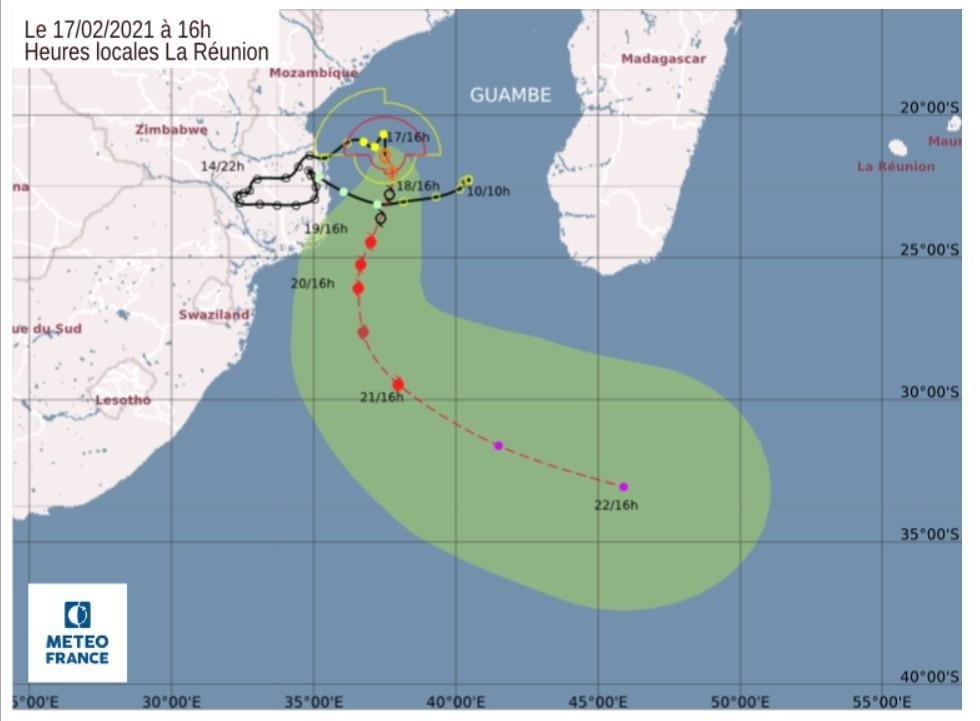
The Path of the Tropical Cyclone Guambe Satellite Image Map 1

The storm intensified rapidly, achieving tropical cyclone status on 19 February and peaking as a Category 2-equivalent tropical cyclone. Guambe underwent an eyewall replacement cycle and weakened back into a severe tropical storm on 20 February. It then transitioned into an extratropical storm on 22 February before being absorbed into another extratropical cyclone the following day.

The storm’s precursor disturbance caused widespread flooding across Mozambique upon making landfall on 12 February, destroying homes, crops, and displacing thousands of people. This catastrophe followed shortly after Cyclone Eloise had made a similar impact. The damage from Guambe is estimated to be in the millions of dollars (2021 USD), although no deaths were reported.

Meteorological History

A disturbance developed in the Mozambique Channel between Mozambique and Madagascar on 10 February. Over the next couple of days, the system moved westward, approaching the Mozambique coast while gradually organizing. On 12 February, Météo-France La Réunion noted that the system transitioned into a subtropical depression and made landfall near Inhambane, Mozambique. The subtropical depression moved slowly inland, developing no significant sustained convective activity near the center.

Over the following days, the system made a slow clockwise loop over Mozambique, gradually organizing. By 15 February, the system had turned back eastward and was predicted to re-emerge into the Mozambique Channel. On 16 February, the system re-emerged over warm open water and was designated as Tropical Disturbance 11. The storm then resumed its organization, strengthening into a tropical depression later that day.

On 17 February, the depression strengthened into a Moderate Tropical Storm Guambe, with deep convection enveloping the northern section of the storm. Despite initial limitations on intensification due to a lack of upper-level divergence, Guambe eventually strengthened into a severe tropical storm on 18 February. Over the next several hours, Guambe underwent rapid intensification, developing a well-defined central dense overcast (CDO) configuration. Guambe reached tropical cyclone status on 19 February, with the appearance of a small eye on infrared satellite imagery and a well-defined core structure.

Despite forecasts of further strengthening, Guambe rapidly weakened back to severe tropical storm status on 20 February, due to an eyewall replacement cycle, while the storm began accelerating towards the southeast. Guambe further decayed as its rainbands unraveled and its cloud tops warmed, brought on by high wind shear and cool sea surface temperatures. On 21 February, Guambe began undergoing an extratropical transition, completing it the following day as the storm interacted with the southern jet stream. On 23 February, Guambe was absorbed into another larger extratropical cyclone.

Preparations and Impact

Guambe’s precursor disturbance caused prolific rainfall across Mozambique, leading to widespread flooding and displacing over 27,000 people. The storm washed out two bridges on the Umbeluzi River, flooded hundreds of homes, and destroyed numerous crops. A prison in southern Mozambique transferred 150 prisoners to another facility 80 kilometres (50 mi) away due to the risk of flooding from the storm. The storm struck less than a month after Cyclone Eloise had made landfall near the same place, exacerbating the ongoing crisis in the region.

The storm also caused flooding in parts of northeastern South Africa during this time. As a tropical disturbance, Guambe was responsible for millions of dollars (2021 USD) in damages in South Africa. After Guambe re-emerged into the Mozambique Channel on 16 February and began strengthening, local authorities in Mozambique prepared for the potential of additional flooding, particularly in the region between Beira and Inhambane.

Interestingly, the deaths of 186 Spinner dolphins off of Bazaruto Archipelago National Park were thought to be due to Cyclone Guambe. However, there were no additional reports of damage to human property as Guambe accelerated southeastward.

To summarize, the path of Tropical Cyclone Guambe was a destructive one, causing significant damage in Mozambique and South Africa. The cyclone followed a unique trajectory, making a clockwise loop over Mozambique before re-emerging into the Mozambique Channel and intensifying. Despite the extensive damage and displacement of thousands of people, no fatalities were reported in association with the storm. The response from local authorities and international aid agencies has been crucial in managing the aftermath and aiding in recovery efforts.
Hypothesis on Tropical Cyclone Freddy in Mozambique

Hypothesis on Tropical Cyclone Freddy in Mozambique Tropical Cyclone Freddy made its second landfall in Mozambique in Quelimane District, Zambezia Province, on 11 March.

The Freddy weather system has continued to move over land as a tropical depression, with a localized centre close to the border between Mozambique and the southern tip of Malawi, according to Meteo France. Although the system has weakened considerably, it is still generating intense rainfall in the interior of Mozambique and southern Malawi, with extreme rainfall forecasted for the days ahead across Zambezia, Sofala and Tete provinces in Mozambique and southern Malawi, according to the latest Flood Risk Bulletin produced for and with support of the Foreign Commonwealth and Development Office (FCDO) of the United Kingdom.

Tropical Cyclone Freddy provides a unique case study for grade 12 Geography students to explore. By examining various variables such as sea surface temperatures, atmospheric pressure, wind speed and direction, and geographical features of Mozambique, learners can generate and test hypotheses that could explain the cyclone’s characteristics and impacts.

Guide for Generating a Hypothesis on Tropical Cyclone Freddy in Mozambique

Step 1: Understand the Problem

The first step in any scientific inquiry is to understand the problem at hand. In this case, the problem is Tropical Cyclone Freddy in Mozambique. Research about tropical cyclones, their causes, and impacts. Understand the geographical and climatic conditions of Mozambique. Consider what you already know about the factors that contribute to the formation and the path of a tropical cyclone.

Step 2: Gather Preliminary Data

Find data about Tropical Cyclone Freddy. This could include its path, wind speed, rainfall, damage caused, etc. Also, try to find data about the conditions in Mozambique before, during, and after the cyclone. This could include data about temperature, humidity, atmospheric pressure, and oceanic conditions. Other relevant data might include the time of the year the cyclone occurred, the state of the El Niño/La Niña cycle, and Mozambique’s geographical features that might influence cyclone paths.

Step 3: Identify Variables

From your research and the data gathered, identify the variables that might be connected to the problem. Variables could be anything that could influence the cyclone’s formation, path, or impacts. Examples might include sea surface temperature, atmospheric pressure, humidity, wind speed and direction, Mozambique’s topography, and population density.

Step 4: Formulate Your Hypothesis

A hypothesis is a testable statement that predicts the relationship between variables. Based on your understanding of the problem and the data you’ve gathered, make an educated guess about what might have caused or influenced the cyclone’s formation, path, or impacts. Your hypothesis should clearly state what you think the relationship is between your identified variables.

For example: “If sea surface temperatures were above average in the Indian Ocean off the coast of Mozambique prior to Tropical Cyclone Freddy, then this may have contributed to the cyclone’s formation and intensity.”

Step 5: Test Your Hypothesis

Plan and conduct an investigation to test your hypothesis. This could involve more detailed data analysis, creating models, running simulations, or even conducting experiments if possible.

Step 6: Analyze Your Results and Draw Conclusions

Analyze the results of your investigation to see if they support your hypothesis. If the data supports your hypothesis, then it may be valid. If the data doesn’t support your hypothesis, then it may need to be revised or discarded.

Remember, in scientific inquiry, even a hypothesis that turns out to be incorrect is valuable because it contributes to our understanding of the world. The goal is not necessarily to prove your hypothesis right, but to understand more about the world.

Step 7: Communicate Your Findings

Lastly, communicate your findings in a clear, organized manner. This could be in the form of a report, presentation, or discussion. Include your initial hypothesis, the methods you used to test it, your results, and what those results mean in the context of your hypothesis.

DON’T MISS: How to Pass Geography Grade 12 NSC With Distinction

This guide should help you formulate and test a hypothesis about Tropical Cyclone Freddy in Mozambique. Remember, the process of scientific inquiry is iterative and often requires multiple rounds of hypothesis generation, testing, and revision. Good luck!

Example of Hypothesis Related to Tropical Cyclone Freddy in Mozambique

Here are ten possible hypotheses related to Tropical Cyclone Freddy in Mozambique. Remember, these are educated guesses based on what we know about tropical cyclones and the geography and climate of Mozambique. They would each need to be tested using appropriate methods and data.

  1. Hypothesis on Sea Surface Temperature: Higher sea surface temperatures in the Indian Ocean off the coast of Mozambique contributed to the increased intensity of Tropical Cyclone Freddy.
  2. Hypothesis on Atmospheric Pressure: Lower atmospheric pressure in the region where Tropical Cyclone Freddy formed led to the cyclone’s rapid intensification.
  3. Hypothesis on Wind Patterns: The prevailing wind patterns at the time of Tropical Cyclone Freddy’s formation influenced its path, leading it to make landfall in Mozambique.
  4. Hypothesis on Humidity Levels: High humidity levels in the atmosphere over Mozambique contributed to the high rainfall amounts associated with Tropical Cyclone Freddy.
  5. Hypothesis on Topography: The flat coastal plains of Mozambique contributed to the extensive flooding caused by Tropical Cyclone Freddy.
  6. Hypothesis on El Niño/La Niña Cycle: The stage of the El Niño/La Niña cycle at the time of Tropical Cyclone Freddy’s formation influenced its intensity and path.
  7. Hypothesis on Land Use: Deforestation and land use changes in Mozambique have increased the country’s vulnerability to the impacts of tropical cyclones like Freddy.
  8. Hypothesis on Urbanization: Urbanized areas in Mozambique experienced more severe impacts from Tropical Cyclone Freddy due to factors like population density and infrastructure.
  9. Hypothesis on Climate Change: Climate change, as evidenced by rising sea surface temperatures and increased atmospheric moisture, is making tropical cyclones like Freddy more intense and more damaging when they make landfall in Mozambique.
  10. Hypothesis on Coastal Barrier Systems: Degradation of coastal barrier systems, such as mangrove forests and coral reefs, has increased Mozambique’s vulnerability to storm surges associated with tropical cyclones like Freddy.

Each of these hypotheses can be tested using a combination of historical data, climate models, geographical analysis, and potentially ground-based surveys or studies.

Background Information About Drought in Northern Cape, South Africa

Background Information About Drought in Northern Cape, South Africa

Background Information About Drought in Northern Cape, South Africa: The

Background Information About Drought in Northern Cape, South Africa Northern Cape province in South Africa is facing a severe drought crisis, a challenge that has persisted for more than a decade. Not only is this drought causing significant economic stress, particularly for the agricultural sector, but it’s also taking a substantial toll on the mental health of the province’s residents, notably the younger generation.

Persistent Drought and the Agricultural Impact

According to Farmers Weekly, the Northern Cape has endured a sustained drought for the past twelve years, with farmers bearing the brunt of this natural disaster. The drought has significantly affected livestock and crop production, forcing many farmers to make difficult decisions about their future.

The drought conditions have severely reduced the availability of grazing land, forcing farmers to cull their herds, which in turn has impacted their income and the local economy. The production of staple crops has also drastically declined, leading to increased food prices, which further compounds the hardships faced by the local population. This sustained drought has left many questioning the viability of agriculture in the Northern Cape, with some farmers considering relocation or a change in occupation as a result of the ongoing crisis.

The Association for Rural Advancement (AFRA) has also highlighted the struggles faced by small-scale farmers who do not have the financial resources to adapt to these challenging conditions. They have called for increased support and resources to help these farmers navigate the drought and to develop more resilient farming practices.

The Psychological Toll of the Drought

According to the Daily Maverick, the drought has also had a significant impact on the mental health of Northern Cape’s residents, particularly among the young people. The uncertainty and stress associated with the drought have led to increased rates of anxiety and depression in the region.

The economic stress related to the drought, including job loss and food insecurity, has been identified as a key factor contributing to this mental health crisis. The drought has forced many young people to leave their homes in search of work, causing feelings of displacement and homesickness. The psychological toll of the ongoing drought is a pressing issue that warrants immediate attention, highlighting the need for additional resources to support mental health in the region.

The Future of Northern Cape

As reported by the APDUSA, the impacts of the drought in the Northern Cape are far-reaching and will likely be felt for many years to come. The challenge for the region is to develop and implement sustainable strategies that can mitigate the impacts of the drought and build resilience for future climatic events.

DON’T MISS: How to Pass Geography Grade 12 NSC With Distinction

The Northern Cape needs innovative solutions that can provide immediate relief, but also strategies that can help the region adapt to a future that may involve ongoing changes in climate. This includes investing in water-efficient technologies, exploring alternative farming practices, and improving mental health support services for the population.

In conclusion, the drought in Northern Cape is not just an environmental or agricultural issue, but a socio-economic and mental health crisis as well. As the region continues to grapple with the impacts of this ongoing drought, it is clear that a coordinated and comprehensive approach is required to help the region recover and build resilience for the future.

Need Help with your School Project?

Are you struggling with your Project? Well, we can help you in terms of answering the questions and learning the key objectives of the topics. Please upload the pdf document of the Project and we will ensure we help you with the answering guide so that you pass it with distinctions.

The Stage of Development of the Tropical Cyclone: A Journey Through Nature’s Most Powerful Storms

The Stage of Development of the Tropical Cyclone: A Journey Through Nature’s Most Powerful Storms The key stages in the lifecycle of a typical tropical cyclone are incipient disturbance, tropical storm, tropical cyclone (hurricane, typhoon), and possibly severe tropical cyclone (major hurricane, supertyphoon). Having reached its peak intensity at one of these stages (see Box 8-3) for storm intensity classifications, the storm will either decay or undergo extratropical transition. These stages are associated with changes in the storm intensity and structure. In this section, we review the physical stages of the storm lifecycle as illustrated by the stages of Hurricane.

The Stage of Development of the Tropical Cyclone: A Journey Through Nature’s Most Powerful Storms:

Tropical cyclones are among the most powerful and destructive natural phenomena on Earth. Understanding the stages of their development is not only crucial for scientific research, but it’s also integral to predict and prepare for these events, mitigating their impacts on human societies and economies.

The Stage of Development of the Tropical Cyclone

The stages of a tropical cyclone’s development include formation, intensification, maturity, and decay, each characterized by different meteorological conditions and behaviors.

Formation: Tropical Disturbance

The journey of a tropical cyclone begins as a tropical disturbance, typically formed over warm ocean waters near the equator. The disturbance is characterized by a large mass of thunderstorms with minimal rotation. For a cyclone to form, the sea surface temperature generally needs to be above 26.5°C (80°F), providing the necessary energy and moisture to fuel storm development. Furthermore, conditions in the upper atmosphere must be favorable, with low wind shear to allow the storm to maintain its structure.

Intensification: Tropical Depression and Tropical Storm

If conditions are favorable, the tropical disturbance can intensify into a tropical depression. This stage is marked by increased organization of thunderstorms and the formation of a closed circulation of winds, with sustained wind speeds less than 38 mph (62 km/h). Weather authorities start to track the system carefully at this stage, as it could potentially develop into a more dangerous tropical storm.

As the system continues to strengthen and wind speeds increase to between 39 mph (63 km/h) and 73 mph (118 km/h), it becomes a tropical storm. This stage is typically when the system receives a name from meteorological organizations. The storm’s structure continues to become more organized, often developing a characteristic circular shape, and the cyclonic rotation becomes more apparent.

Maturity: Hurricane or Typhoon

When a tropical storm’s sustained wind speeds exceed 74 mph (119 km/h), it graduates to the status of a hurricane, typhoon, or cyclone, depending on the geographical location. The storm reaches its mature phase, characterized by a well-defined eye (an area of relative calm at the center of the storm), an eyewall (a ring of thunderstorms encircling the eye), and spiral rainbands. The central pressure continues to drop, and wind speeds can increase dramatically, creating a potential for significant damage.

The maturity phase can last for several days as the storm moves across the ocean, potentially reaching a peak intensity as a Category 5 hurricane (or equivalent), with wind speeds exceeding 157 mph (252 km/h).

Decay: Extratropical Transition and Dissipation

Eventually, the tropical cyclone begins to decay, often due to the impact of land interaction, cooler water, or increased wind shear, disrupting the storm’s structure. As it moves poleward, it may undergo an extratropical transition, where it transforms from a tropical cyclone to an extratropical cyclone, losing its characteristic features like the eye and gaining fronts instead.

Finally, the storm dissipates, usually over land or cooler waters, where it no longer has the heat energy required to fuel it. The remnants of the storm may still bring substantial rainfall and wind, but the organized cyclonic structure will have broken down.

Conclusion

Understanding the stages of tropical cyclone development is vital for both meteorological knowledge and practical forecasting. While these stages can vary somewhat between different cyclones and regions, the general progression from tropical disturbance to dissipation represents a common pathway for these formidable weather phenomena. Despite the destruction they can cause, tropical cyclones are awe-inspiring examples of Earth’s dynamic weather systems and remain an important area of research for scientists.

Evaluating the Impact of Global Warming on the Frequency (Regularity) of Tropical Cyclones

Evaluating the Impact of Global Warming on the Frequency (Regularity) of Tropical Cyclones Global warming has been widely recognized as one of the main drivers of the increase in frequency and intensity of tropical cyclones in recent years. As the planet warms, it is creating a more favorable environment for the formation of tropical cyclones. Below are some of the impacts of global warming on the frequency of tropical cyclones:

Tropical cyclones, also known as hurricanes or typhoons, are powerful weather systems that often bring devastating winds, heavy rainfall, and storm surges to coastal areas. With the increasing concerns about global warming and its impact on the environment, scientists and researchers have been studying the relationship between global warming and the frequency of tropical cyclones. This blog post aims to explore the methodologies and findings of these studies to evaluate the impact of global warming on the regularity of tropical cyclones.

Understanding Tropical Cyclones

Before delving into the impact of global warming, it is essential to understand the nature and formation of tropical cyclones. These intense storms primarily occur over warm ocean waters near the equator. They form when warm, moist air rises from the ocean surface, creating an area of low pressure. As this air rises, it cools and condenses, releasing heat energy and causing the storm to intensify. The rotation of the Earth gives these storms their characteristic circular motion.

The Influence of Global Warming

Global warming refers to the long-term increase in Earth’s average surface temperature due to human activities, primarily the emission of greenhouse gases like carbon dioxide. As the Earth’s climate changes, it leads to alterations in various weather patterns, including tropical cyclones. However, assessing the impact of global warming on the frequency of tropical cyclones is a complex task that requires comprehensive analysis.

Methodologies for Evaluation

Scientists have employed multiple methodologies to evaluate the impact of global warming on the frequency of tropical cyclones. These approaches typically involve analyzing historical cyclone data, modeling exercises, and studying climate change scenarios. By combining these methods, researchers can gain a better understanding of the relationship between global warming and tropical cyclone regularity.

Historical Data Analysis

Analyzing historical cyclone data is a fundamental approach to evaluating the impact of global warming. Scientists examine long-term records of tropical cyclones to identify any trends or patterns. They analyze factors such as cyclone frequency, intensity, duration, and geographical distribution. By comparing historical data with recent observations, researchers can identify any changes that may be attributable to global warming.

Climate Models and Simulations

Climate models and simulations play a crucial role in understanding the impact of global warming on tropical cyclones. These models simulate the Earth’s climate system, incorporating various factors such as greenhouse gas emissions, sea surface temperature, and atmospheric conditions. By running simulations with and without global warming scenarios, researchers can compare the frequency and intensity of tropical cyclones under different conditions.

Climate Change Scenarios

Scientists also evaluate the impact of global warming on tropical cyclones by examining climate change scenarios. These scenarios involve projecting future climate conditions based on different greenhouse gas emission trajectories. By analyzing these projections, researchers can estimate how the frequency of tropical cyclones may change in the coming decades.

Findings and Controversies

The evaluation of the impact of global warming on the frequency of tropical cyclones has yielded mixed findings and some controversies. While some studies suggest that global warming may lead to an increase in the frequency and intensity of tropical cyclones, others indicate a decrease or no significant change. The variations in findings can be attributed to differences in methodologies, data sources, and the complexities of the climate system.

Increased Sea Surface Temperatures:

As the earth’s temperature increases, the sea surface temperature also rises. This increased temperature provides more energy to tropical cyclones resulting in a greater propensity for their formation.

Higher Moisture Content:

As the temperature increases, evaporation rates rise, and the atmosphere holds more moisture resulting in higher humidity levels. When the humid air mixes with the cold air, it creates favorable conditions for tropical cyclones.

Changes in Wind Patterns:

Global warming affects wind patterns by altering ocean currents, causing more intense El Niño events, and changing tropical trade winds. These changes in wind patterns influence the frequency of tropical cyclones and can make them more frequent and severe.

Melting of Glaciers:

The melting of glaciers and ice caps increases the sea’s level, which can lead to more frequent and severe flooding when a tropical cyclone makes landfall.

Conclusion

In summary, global warming has increased the frequency and intensity of tropical cyclones by providing more energy to these storms, introducing more moisture into the atmosphere, changing wind patterns, and increasing the likelihood of coastal flooding. It is essential that we take quick and decisive action to combat global warming to reduce its impact on these and other natural disasters.


TEN Sustainable Solutions that could be Implemented to Minimize the Impact of the Cyclones

TEN Sustainable Solutions that could be Implemented to Minimize the Impact of the Cyclones There are a few sustainable solutions that could be implemented to minimize the impact of a cyclone On this page will Discuss Ten of them.

Cyclones, also known as hurricanes or typhoons, depending on their location, pose a significant threat to life, property, and natural ecosystems. While they are natural phenomena that we cannot stop, we can implement sustainable strategies to minimize their impacts.

List of TEN Sustainable solutions that could be implemented to minimize the impact of the cyclones

Here are some sustainable solutions to consider:

  1. Building Resilient Infrastructure: Infrastructure is often heavily damaged by cyclones. One way to minimize this impact is to design and build infrastructure with these events in mind. This includes building structures that can withstand high winds, using materials that resist water damage, and designing infrastructure that can recover quickly after a cyclone passes.
  2. Coastal and Wetland Management: Coastal ecosystems, such as mangroves and coral reefs, and inland wetlands provide natural barriers to the surge of water that comes with cyclones. These ecosystems can absorb much of this surge and reduce the impact on inland areas. Therefore, preserving and restoring these ecosystems is crucial.
  3. Improved Forecasting and Early Warning Systems: The better we can predict the path and strength of a cyclone, the more time we have to prepare and evacuate people from the danger zone. Investing in technology and systems for better forecasting can therefore save lives and minimize property damage.
  4. Education and Preparedness: Communities that are educated about cyclones and have preparedness plans in place are more likely to survive these events with minimal loss. This can include things like regular drills, building emergency kits, and having evacuation plans in place.
  5. Sustainable Land Use and Zoning: It’s essential to consider cyclone risks in land-use planning and zoning decisions. This might mean avoiding construction in areas that are particularly vulnerable to cyclones or building in a way that minimizes potential damage.
  6. Green Energy Solutions: Although this does not directly prevent cyclone damage, adopting renewable energy solutions reduces the emissions driving climate change, which may increase the frequency and severity of cyclones. Solar, wind, and hydroelectric power are all sustainable alternatives to fossil fuels.
  7. Community-based Disaster Management: Engaging local communities in cyclone preparedness, response, and recovery efforts can significantly reduce disaster risk. Local communities often possess unique knowledge of their environment, which can be invaluable in managing cyclones effectively.
  8. Climate-Resilient Agriculture: In many areas affected by cyclones, agriculture is a significant part of the economy. Implementing practices that can withstand severe weather events and recover quickly afterward is essential. This might involve planting more robust crop varieties, using natural buffers like trees to protect fields, or diversifying crops to avoid total loss.
  9. Insurance and Financial Instruments: Innovative financial instruments like catastrophe bonds and insurance can transfer the financial risks associated with cyclones from governments and homeowners to global financial markets. This can help ensure that funds are available for immediate response and recovery efforts after a cyclone.
  10. Policy and Legislation: Policies and laws must be in place to support all of the above strategies. This includes regulations on building codes, land use, and environmental protection, as well as policies to encourage the use of renewable energy and sustainable agriculture.

Video: Reducing the effects of tropical storms

Implementing these solutions requires a collaborative effort from governments, businesses, and individuals. With the increasing threat of cyclones due to climate change, it’s more important than ever to take proactive steps to minimize their impact.

Source : https://ajiraforum.com/south-africa/ten-sustainable-solutions-that-could-be-implemented-to-minimize-the-impact-of-the-cyclones/

ESSAY: The Impact of Human Activities on Rivers in South Africa Grade 12 Research

ESSAY: The Impact of Human Activities on Rivers in South Africa Grade 12 Research South Africa is a country blessed with abundant natural resources, including its rivers. Rivers play a vital role in sustaining life, supporting ecosystems, and providing water for various purposes. However, the increasing human activities and the resulting pollution have posed a significant threat to the health and well-being of these vital water bodies. This essay explores the impact of human activities on rivers in South Africa, focusing on the environmental, social, and economic consequences.

  1. Environmental Consequences: Human activities such as industrialization, agriculture, and urbanization have led to the pollution of rivers in South Africa. Industrial discharges, agricultural runoffs, and untreated sewage find their way into the rivers, contaminating the water and affecting the aquatic ecosystem. This pollution disrupts the natural balance, leading to the decline of aquatic life, loss of biodiversity, and degradation of ecosystems. Moreover, the excessive extraction of water for irrigation and industrial purposes has resulted in reduced river flow, affecting the overall health of these water bodies.
  2. Health Implications: The pollution of rivers has severe health implications for both humans and wildlife. Contaminated water sources pose a risk of waterborne diseases, such as cholera, dysentery, and typhoid. Communities living near polluted rivers are at a higher risk of contracting these diseases, especially if they rely on the river water for drinking, cooking, and bathing. Furthermore, the presence of harmful chemicals, heavy metals, and pesticides in the water can accumulate in the food chain, posing long-term health risks to both humans and animals.
  3. Education Challenges: The impact of human activities on rivers extends beyond the environment and health. It also affects education, particularly for children living in rural areas. When water sources become polluted or scarce, children are forced to spend hours fetching water, limiting their access to education. The time spent collecting water could have been devoted to studying, resulting in a negative impact on their academic performance and future prospects. Lack of access to clean water and sanitation facilities in schools further exacerbates the problem, creating an unhealthy learning environment.
  4. Economic Ramifications: The degradation of rivers in South Africa has significant economic implications. Water scarcity and pollution affect various industries, including agriculture, tourism, and manufacturing. Reduced water availability for irrigation leads to lower crop yields, impacting the livelihoods of countless farmers. Additionally, polluted rivers deter tourists, negatively affecting the tourism industry, which relies on clean and attractive water bodies. Moreover, industries that rely on water for production face higher costs and operational challenges due to the need for advanced treatment processes.

Solutions and the Way Forward: Addressing the impact of human activities on rivers in South Africa requires a multi-faceted approach involving various stakeholders. Here are some potential solutions:

a) Investment in Infrastructure: Enhancing water treatment facilities and sewage systems can significantly reduce the pollution entering the rivers. Constructing wastewater treatment plants and upgrading existing infrastructure can ensure that industrial and domestic effluents are properly treated before being discharged into rivers.

b) Education and Awareness: Promoting education and awareness about the importance of clean water and sustainable water management practices is crucial. Educational campaigns and programs can help communities understand the consequences of pollution and encourage responsible water usage.

c) Rainwater Harvesting and Water Reuse: Encouraging the adoption of rainwater harvesting systems can help reduce the pressure on rivers for water supply. Additionally, promoting the reuse of treated wastewater for non-potable purposes, such as irrigation and industrial processes, can help conserve freshwater resources.

d) Collaboration and International Support: Addressing the challenges faced by South Africa’s rivers requires collaboration between government bodies, non-profit organizations, and international support. Sharing best practices, technical expertise, and financial assistance can contribute to sustainable river management and the protection of water resources.

Conclusion:

The impact of human activities on rivers in South Africa is a critical issue that demands immediate attention. By addressing the environmental, social, and economic consequences, we can safeguard the health of our rivers, protect biodiversity, and ensure access to clean water for all. Investing in infrastructure, promoting education and awareness, adopting sustainable water practices, and fostering collaboration are crucial steps towards mitigating the impact of human activities on rivers. By doing so, we can improve the quality of life, promote economic growth, and preserve the natural resources of South Africa for future generations

The Impact of Lack of Access to Clean Water in South Africa

The Impact of Lack of Access to Clean Water in South Africa South Africa, a land of breathtaking landscapes and diverse cultures, is plagued by a severe water crisis that is impacting the lives of millions of its citizens. The scarcity of clean water in this country has far-reaching consequences on various aspects of life, including health, education, economy, and the environment.

Health Implications

One of the most significant impacts of the lack of access to clean water is on public health. Contaminated water sources lead to the spread of waterborne diseases such as cholera, dysentery, and typhoid fever. These diseases can be debilitating and even fatal, particularly for vulnerable populations such as children and the elderly. The absence of clean water also limits proper hygiene practices, as individuals are unable to wash their hands or maintain clean living conditions, further exacerbating the risk of disease transmission.

Education Challenges

Another consequence of the water crisis in South Africa is its impact on education. Without access to clean water, schools struggle to provide a safe and healthy learning environment for students. Lack of proper sanitation facilities and clean water sources compromises the health and well-being of students, leading to increased absenteeism and reduced academic performance. Students who are constantly battling waterborne illnesses are unable to attend school regularly, perpetuating a cycle of limited access to education and decreased opportunities for future success.

Economic Ramifications

The water crisis also has severe economic ramifications for South Africa. Limited access to clean water makes it challenging for individuals and communities to engage in productive economic activities. Agriculture, which is a significant sector of the South African economy, suffers due to water scarcity, leading to decreased crop yields and increased food insecurity. Additionally, industries that rely on water, such as manufacturing and mining, face operational challenges and increased costs due to the need for alternative water sources or expensive water treatment processes.

Environmental Consequences

The environmental impact of the water crisis cannot be overlooked. Water scarcity puts pressure on natural resources, leading to the overexploitation of water sources and the degradation of ecosystems. The depletion of groundwater and rivers affects biodiversity, disrupts ecosystems, and threatens the survival of various plant and animal species. Furthermore, the scarcity of water leads to increased competition and conflicts over water resources, further straining social and political relationships.

Addressing the Crisis

Addressing the water crisis in South Africa requires a multi-faceted approach involving various stakeholders, including the government, communities, and international organizations. Some potential solutions include:

  1. Investment in Infrastructure: The government needs to invest in infrastructure development, including water treatment plants, pipelines, and storage facilities, to ensure a sustainable supply of clean water.
  2. Education and Awareness: Educating communities about the importance of clean water, proper sanitation practices, and water conservation can help foster a culture of responsible water usage.
  3. Rainwater Harvesting and Water Reuse: Promoting rainwater harvesting techniques and water reuse systems can help alleviate the strain on existing water sources and provide alternative sources of clean water.
  4. Collaboration and International Support: Collaboration between governments, NGOs, and international organizations can facilitate knowledge sharing, funding, and technological advancements to address the water crisis effectively.

Conclusion

The lack of access to clean water in South Africa has severe implications for public health, education, the economy, and the environment. It is a complex issue that requires concerted efforts and long-term solutions to ensure that every citizen has access to this fundamental resource. By addressing the water crisis, South Africa can improve the quality of life for its citizens, promote economic growth, and protect its natural resources for future generations.

Why do Tropical Cyclones Develop in Late Summer?

Why do Tropical Cyclones Develop in Late Summer? Tropical cyclones are powerful and destructive weather phenomena that develop over warm ocean waters. These intense storms pose a significant threat to coastal regions, causing widespread damage and loss of life. One common question that arises is why tropical cyclones tend to form during late summer. In this blog post, we will explore the factors that contribute to the development of tropical cyclones during this specific period.

  1. Warm Ocean Temperatures: Late summer is characterized by the warmest ocean temperatures . Tropical cyclones require warm water as fuel for their formation and intensification. The warm ocean waters provide the necessary energy for the storm system, acting as a heat source that drives the convective process within the cyclone.
  2. Low Wind Shear: During late summer, there is typically less wind shear, which is the variation in wind speed and direction with height. Wind shear can disrupt the vertical organization of a storm system and hinder its development. With reduced wind shear, the cyclonic structure of tropical cyclones remains intact, allowing them to strengthen and maintain their intensity .
  3. Favorable Atmospheric Environment: Late summer also offers a favorable atmospheric environment for the formation of tropical cyclones. The combination of warm ocean waters, low wind shear, and high humidity creates ideal conditions for the development of these storms. The high humidity promotes the release of latent heat, further fueling the convective activity within the cyclone .
  4. Hurricane Season Peak: Late summer coincides with the peak of the hurricane season in many regions. This means that the overall atmospheric and oceanic conditions are most conducive to tropical cyclone formation during this period . The convergence of favorable factors increases the likelihood of cyclone development, making late summer a critical time for monitoring and preparedness in hurricane-prone areas.

Previous Tropical Cyclones In the Past Summers in Southern Africa

Mozambique, located in southeast Africa, is no stranger to the devastating impacts of tropical cyclones. The country’s eastern coastline stretches along the Indian Ocean, making it particularly susceptible to these natural disasters. This article will explore some notable examples of tropical cyclones that have significantly impacted Mozambique: Freddy, Eloise, Ana, Guambe, and Idai.

Tropical Cyclone Freddy

Though details about Tropical Cyclone Freddy are not provided in your information, historical weather data suggests that cyclones named Freddy have impacted various parts of the globe at different times. In the context of Mozambique, it would be best to provide specific details like the year of occurrence, severity, and impact for an in-depth analysis.

Tropical Cyclone Eloise

Tropical Cyclone Eloise was a formidable storm that impacted Mozambique in the 2020–21 South-West Indian Ocean cyclone season, following Cyclone Kenneth in 2019. It was the second of three consecutive tropical cyclones to strike Mozambique that season, illustrating the vulnerability of the region to these extreme weather events. Eloise highlighted how warm sea surface temperatures, among other factors, could generate intense cyclones during the peak of summer.

Tropical Storm Ana

Ana, though classified as a tropical storm, had a significant impact when it made landfall in Mozambique in January 2022. It primarily affected Angoche district in Nampula province, the northern part of Zambezia province, and the southern part of Tete province. As per the National Disaster Management Institute (INGD), Ana left behind a trail of destruction affecting approximately 4,000 people, injuring 66, and causing five fatalities. The case of Ana demonstrates that even less intense tropical cyclones can still have a devastating impact, particularly when they hit densely populated or vulnerable areas.

Tropical Cyclone Guambe

Guambe was the third tropical cyclone to make landfall in Mozambique since December 2020, following Eloise and Chalane. Guambe originated from a tropical disturbance in the Mozambique Channel in February of the 2020-21 season. The cycle of disturbances evolving into fully-fledged cyclones, as seen with Guambe, shows how one key condition – a pre-existing disturbance – is integral to the formation of these storms.

Intense Tropical Cyclone Idai

Idai stands as one of the most catastrophic cyclones ever to affect Africa and the Southern Hemisphere. This long-lived storm wreaked havoc in Mozambique, Zimbabwe, and Malawi, causing a humanitarian crisis with over 1,500 people dead and many more missing. The devastation from Idai underscores the profound destructive potential of tropical cyclones, particularly when they reach an ‘Intense’ status.

Tropical cyclones Freddy, Eloise, Ana, Guambe, and Idai each represent distinct examples of the severity and impact of these weather phenomena on Mozambique. Understanding their development, trajectory, and aftermath can provide invaluable lessons in disaster preparedness and response, as well as the ongoing study of tropical cyclones in the context of changing global climate patterns. This knowledge is vital not only for geography students in Africa but also for policymakers and disaster management professionals.

Implications for South Africa

The late summer cyclone phenomenon has profound implications for South Africa and the broader southern African region. For instance, in February 2020, South Africa experienced the wrath of Cyclone Eloise, a reminder of the region’s vulnerability to extreme weather events.

While these cyclones can bring about severe destruction, including loss of life and damage to infrastructure, they also play a vital role in distributing heat across the planet and contributing to the rainfall in the region, a critical factor for the agriculture-dependent economies in southern Africa.

Wrap Up

The formation of tropical cyclones during late summer is primarily attributed to warm ocean temperatures, low wind shear, and a favorable atmospheric environment. These factors combine to create the ideal conditions for the development and intensification of these powerful storms. Understanding the seasonal patterns of tropical cyclones can help us better prepare for and mitigate the impacts of these natural disasters.

What is the Impact of Coriolis force and latent heat in the development of tropical cyclones

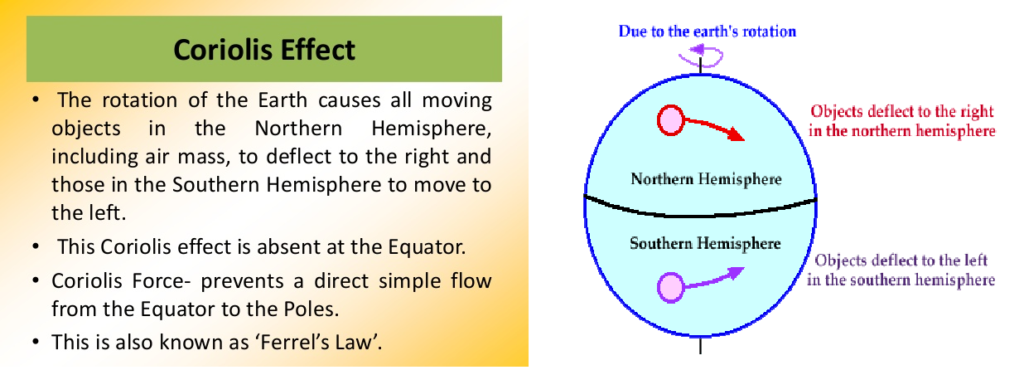
What is the Impact of Coriolis force and latent heat in the development of tropical cyclones The Coriolis force is a result of the Earth’s rotation, causing moving air or water to be deflected to the right in the Northern Hemisphere and to the left in the Southern Hemisphere. This force is essential for the formation and organization of tropical cyclones. Without the Coriolis force, the cyclonic rotation wouldn’t happen.

The Impact of Coriolis Force and Latent Heat on the Development of Tropical Cyclones:

Understanding the physical phenomena that drive the formation and development of tropical cyclones, often known as hurricanes or typhoons, is crucial in predicting their occurrence and mitigating their devastating effects. Among these phenomena, the Coriolis Force and the release of latent heat play significant roles in tropical cyclone development. Here, we aim to elucidate their influence.

What is the impact of Coriolis force and latent heat on the development of tropical Cyclones

The impact of the Coriolis force and latent heat on the development of tropical cyclones is linked to the rotation and intensification of these storms. The Coriolis force, caused by Earth’s rotation, gives cyclones their characteristic spin in the Northern or Southern Hemisphere. Meanwhile, latent heat, which is released when water vapor condenses into droplets in the storm’s updraft, fuels the storm by warming the surrounding air, causing it to rise faster and intensifying the cyclone. Together, the Coriolis effect and latent heat release are crucial for the formation and strengthening of tropical cyclones.

What is the Coriolis Force?

The Coriolis Force is a fictitious or apparent force that acts on a mass moving in a rotating system. It is an essential ingredient in cyclone formation. On Earth, this force is a result of our planet’s rotation.

In the context of tropical cyclones, the Coriolis force causes the air that’s rushing towards the low-pressure center of the cyclone to be deflected. Instead of moving straight inwards, the air spirals, contributing to the distinctive circular pattern of cyclones. Without the Coriolis force, the inrushing air would move directly towards the center, and the cyclone would not form.

Latent Heat in the development of tropical cyclones
Latent Heat in the development of tropical cyclones: Source

However, the Coriolis effect varies with latitude. It’s zero at the equator and increases towards the poles. This is why tropical cyclones do not typically form within 5 degrees latitude of the equator. There isn’t enough Coriolis effect to initiate the cyclonic circulation.

The Role of Latent Heat in Cyclone Formation

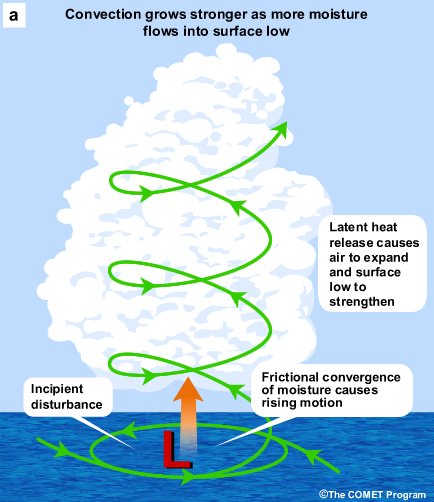
In the tropical oceans, intense solar heating causes evaporation, transforming the surface water into water vapor. As moist air is lighter than dry air, this moisture-laden air tends to rise, a process facilitated by local convective instability or larger-scale weather disturbances.

 forces in the development of tropical cyclones
forces in the development of tropical cyclones

As the water vapor in the rising moist air reaches higher, cooler altitudes, it condenses into liquid droplets, forming clouds. This condensation process releases latent heat – the energy that was initially used to convert the water from a liquid state to a gaseous state.

The release of this latent heat warms the surrounding air, making it lighter. The lighter, warmed air then continues to rise, and this creates a region of low pressure beneath, thus drawing in more surrounding air and moisture. The process repeats, and the storm system begins to grow, fueled by a continuous supply of moisture and latent heat.

As the system strengthens and matures, it can form a tropical cyclone if other necessary conditions are met, such as appropriate sea surface temperatures and wind conditions. The latent heat release is a self-sustaining process that continues to intensify the cyclone until it reaches land, where the moisture supply is cut off, or moves over cooler waters where the heat energy is insufficient for cyclone maintenance.

The Symbiosis of Coriolis Force and Latent Heat Release

In essence, the Coriolis force and the release of latent heat work synergistically in the development of a tropical cyclone. The Coriolis force creates the rotational framework necessary for the cyclone, while the latent heat provides the energy that drives and intensifies the cyclonic system.

Through understanding the interplay between the Coriolis force and latent heat, scientists and meteorologists can improve the prediction and tracking of these powerful storms, potentially saving lives and reducing damage to property and infrastructure.

Overall, these physical phenomena remind us of the intricate balances and immense forces at play in our Earth’s climate system. Understanding these processes not only aids in predicting and mitigating natural disasters but also contributes to our broader comprehension of the Earth’s climate and weather patterns.